


April 27, 2026
SUMMARY
Inflation in Ontario picked up slightly in March, mainly because of higher gasoline prices. Core inflation also edged up after a few months of declines. Outside of energy, price pressures look softer, which could influence the Bank of Canada to hold rates steady for now.
MARCH INFLATION UPDATE
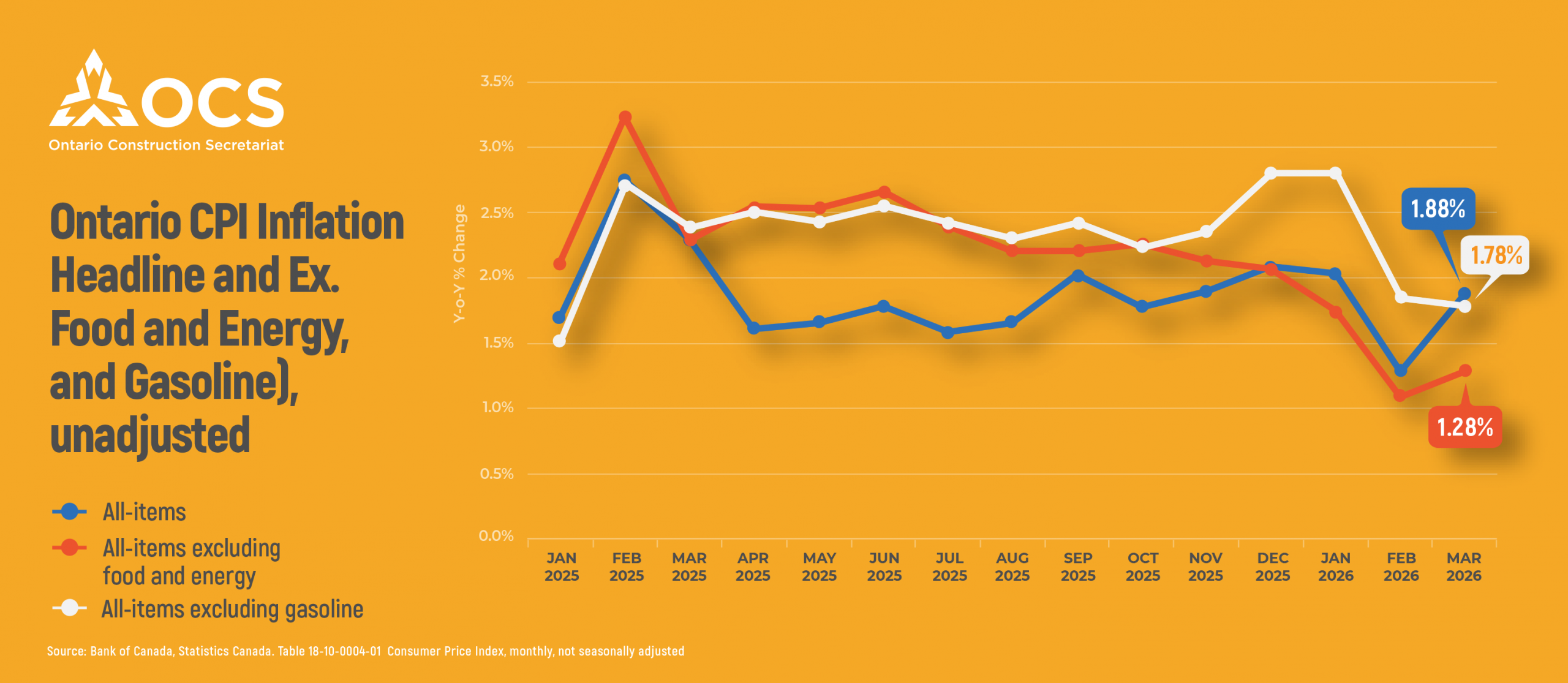
Ontario’s overall inflation rate rose to 1.9% in March after dipping in February. Core inflation, which removes food and energy, increased to 1.3% after three straight monthly declines.
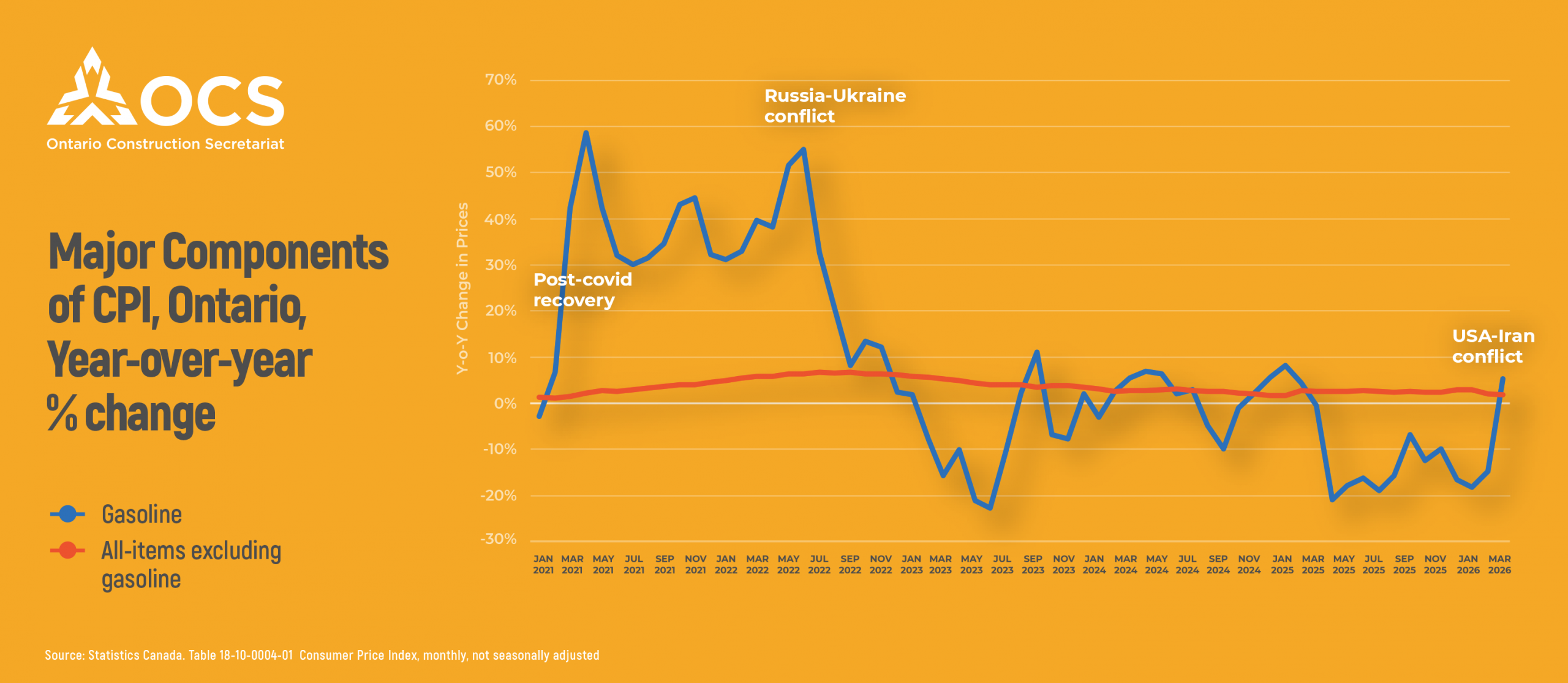
The main reason for the increase was a jump in oil prices. Supply concerns tied to tensions in the Middle East pushed energy costs higher. At the same time, broader inflation pressures appear to be easing beneath the surface.
Major cities saw a similar pattern. Toronto recorded inflation of 1.62%, while Ottawa came in at 2.29% and Thunder Bay at 2.41%. This reflects a modest rise across the province.
KEY DRIVERS
Energy prices rose by 3.1%, a sharp turnaround from the previous decline. Gasoline prices jumped 21% in March alone and were 5.2% higher than a year ago.
Because fuel costs feed into transportation, that category also increased by 3.5% after falling the month before.
If you remove gasoline, overall inflation actually declined from February, showing how much of the increase came from energy.
Food inflation continued to slow overall, falling for the fourth straight month to 4.7%. Within that, restaurant prices eased this month, while grocery prices, which had been declining, ticked up slightly compared to February.
Shelter costs rose slightly by 0.1% after three months of declines. Rent increases contributed to this, with rents rising 2.9% in March compared to 1.3% in February.
Some categories showed softer price growth. Clothing prices declined by 0.9%, and alcohol price increases slowed to 1.3%.
WHAT TO WATCH
Attention now turns to the Bank of Canada’s April 29 decision. While headline inflation moved higher in March, much of that increase came from energy. Measures of core inflation remain relatively contained, suggesting underlying price pressures are still easing.
Looking ahead, energy will remain a key factor in the next few readings. Ongoing global tensions continue to put upward pressure on oil prices, which could keep headline inflation elevated in the near term.
At the same time, a new policy change may offset some of that pressure. The federal government has introduced a temporary suspension of the fuel excise tax starting April 20 and running through early September. This is expected to lower gasoline prices at the pump and reduce costs in sectors like transportation and food.
Because this measure came into effect late in April, its impact will likely be limited in the next release but more visible in May’s data.
Taken together, the mix of higher global energy prices and temporary domestic tax relief makes the near-term inflation outlook less straightforward. However, with core inflation still subdued and food price pressures easing, expectations have shifted away from further rate hikes toward a pause.
Base-year effects are also still playing a role, especially from last year’s carbon tax changes and the end of the GST/HST holiday, which continue to influence year-over-year comparisons.
____________________________
FOR MORE INFORMATION, CONTACT:
Gargi Bharti
Economic and Research Project Lead
Ontario Construction Secretariat (OCS)
180 Attwell Drive, Suite 360, Toronto, ON M9W 6A9
P 416.620.5210
gbharti@iciconstruction.com