


July 15, 2026
SUMMARY
Ontario’s construction labour market improved during the second quarter as seasonal hiring increased. The unemployment rate fell to 5.5%, while both the labour force and employment grew compared with the previous quarter. Older workers accounted for most of the labour force growth, while youth continued to face the highest unemployment rate despite improved hiring. Women also recorded gains in both labour force participation and employment.
LABOUR MARKET OVERVIEW
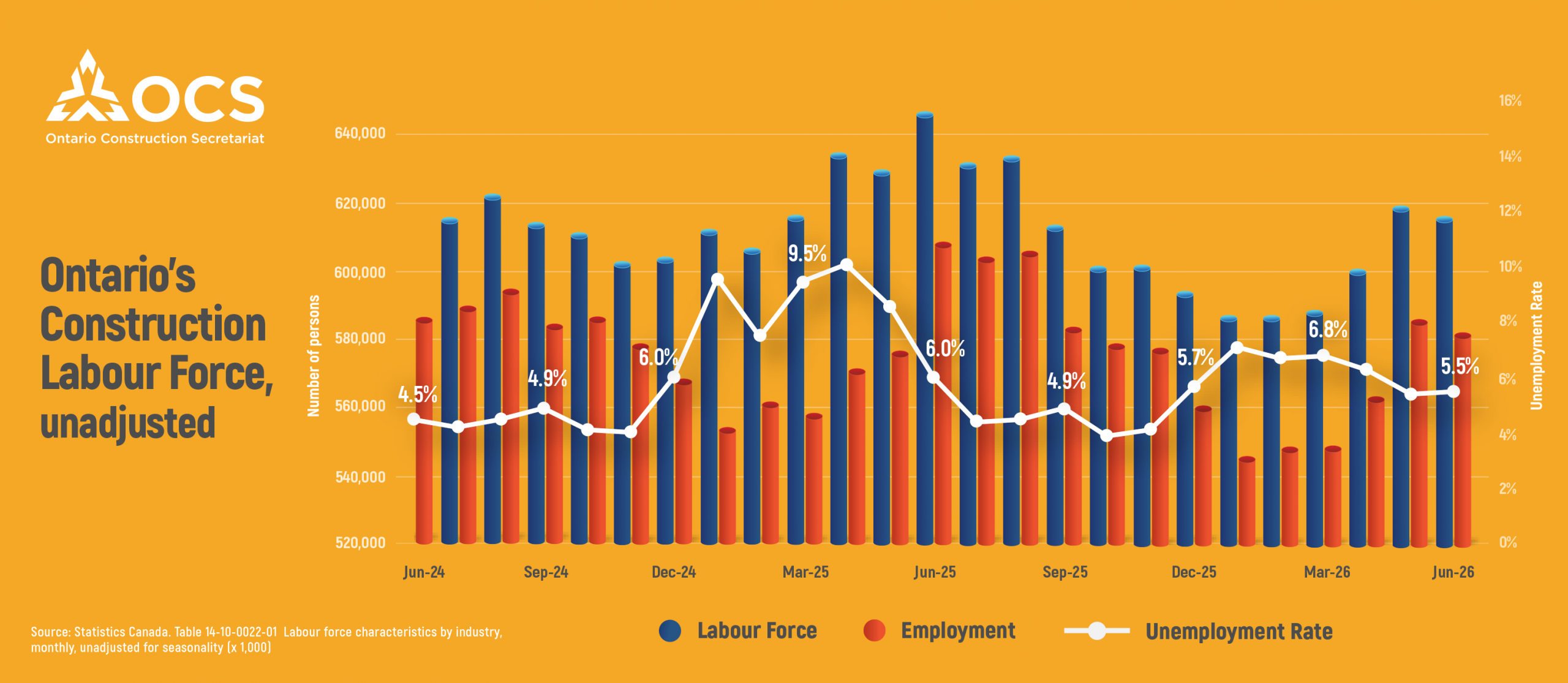
Ontario’s construction unemployment rate fell to 5.5% in June, down from 6.8% in March at the end of the first quarter.
The construction labour force increased by approximately 27,600 workers compared with the previous quarter. However, it remained 30,800 workers lower than at the same time last year.
Construction employment increased by approximately 33,400 jobs, or 6.1%, since March 2026. Despite this seasonal improvement, employment remained 4.7% below the level recorded one year earlier.
COMPOSITION OF THE LABOUR FORCE
The second quarter brought the expected increase in construction activity as the summer building season began. Both the labour force and employment increased across all age groups compared with the previous quarter.
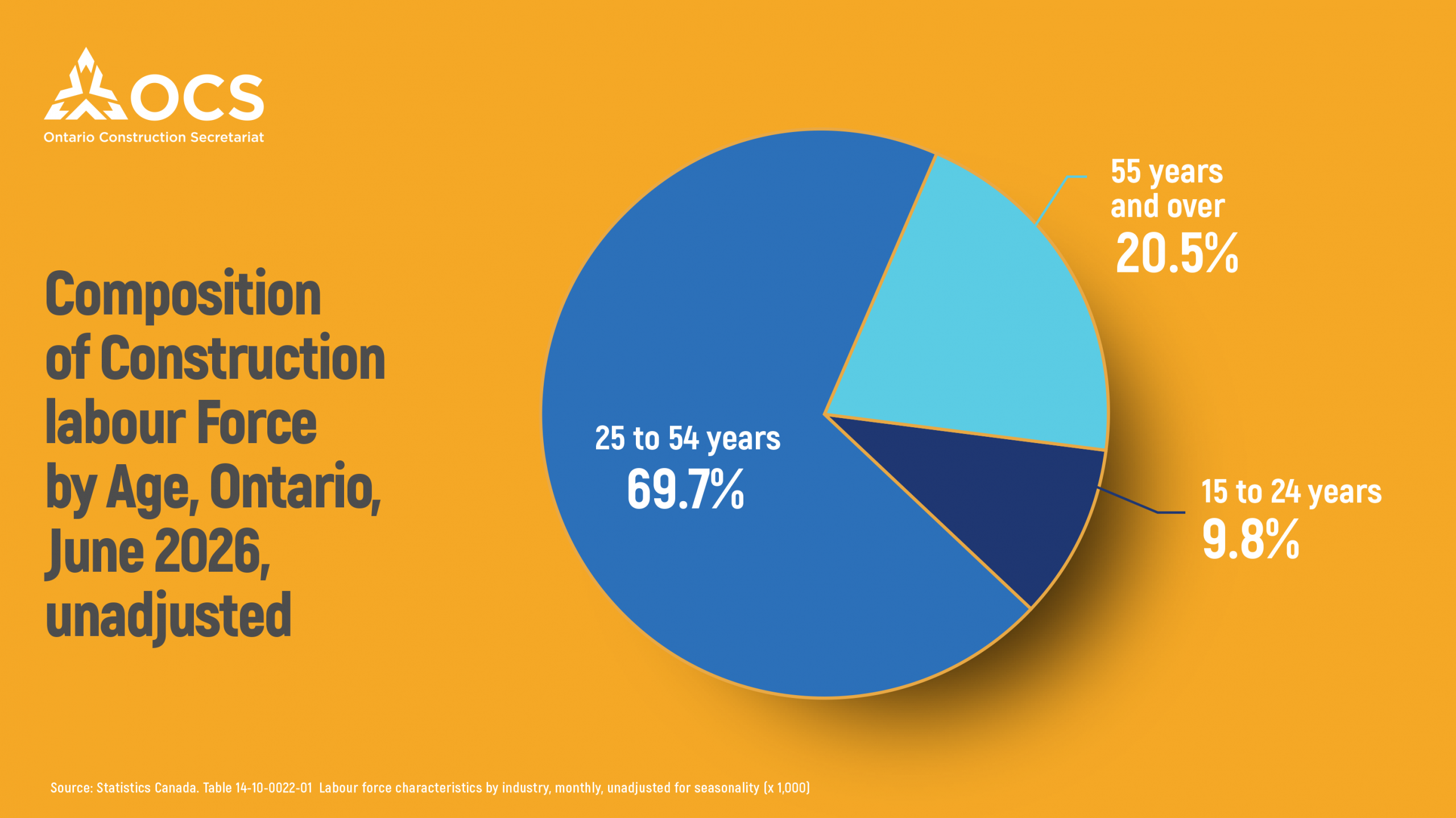
Workers aged 55 years and over accounted for approximately 64% of the quarterly increase in the construction labour force. This group also recorded the strongest employment growth, with employment rising 14.1% compared with March 2026. It was the only age group with more workers than one year ago, adding 12,200 workers to both the labour force and employment. The unemployment rate for this group was 5.5%, equal to the provincial construction average.
The number of young workers aged 15 to 24 increased from the previous quarter but remained 24,400 below last year’s level. Youth accounted for the smallest share of labour force growth and continued to have the highest unemployment rate at 8.5%. Employment grew faster than the labour force during the quarter, suggesting improved hiring conditions, but young workers continued to face greater challenges entering and staying in the construction labour market.
Workers aged 25 to 54 recorded modest growth in the labour force and the strongest employment increase among all age groups, with employment rising 17.5% compared with March. As a result, this group recorded the lowest unemployment rate at 5.2%. On annual basis, the pool shrank by 18,500 workers.
Looking at the longer-term trend, Ontario’s construction workforce continues to age. Compared with one year ago, the number of young workers declined by 24,400, while the number of workers aged 55 and over increased by 12,200. If this trend continues, fewer young entrants combined with an aging workforce could contribute to future labour shortages.
WOMEN IN CONSTRUCTION
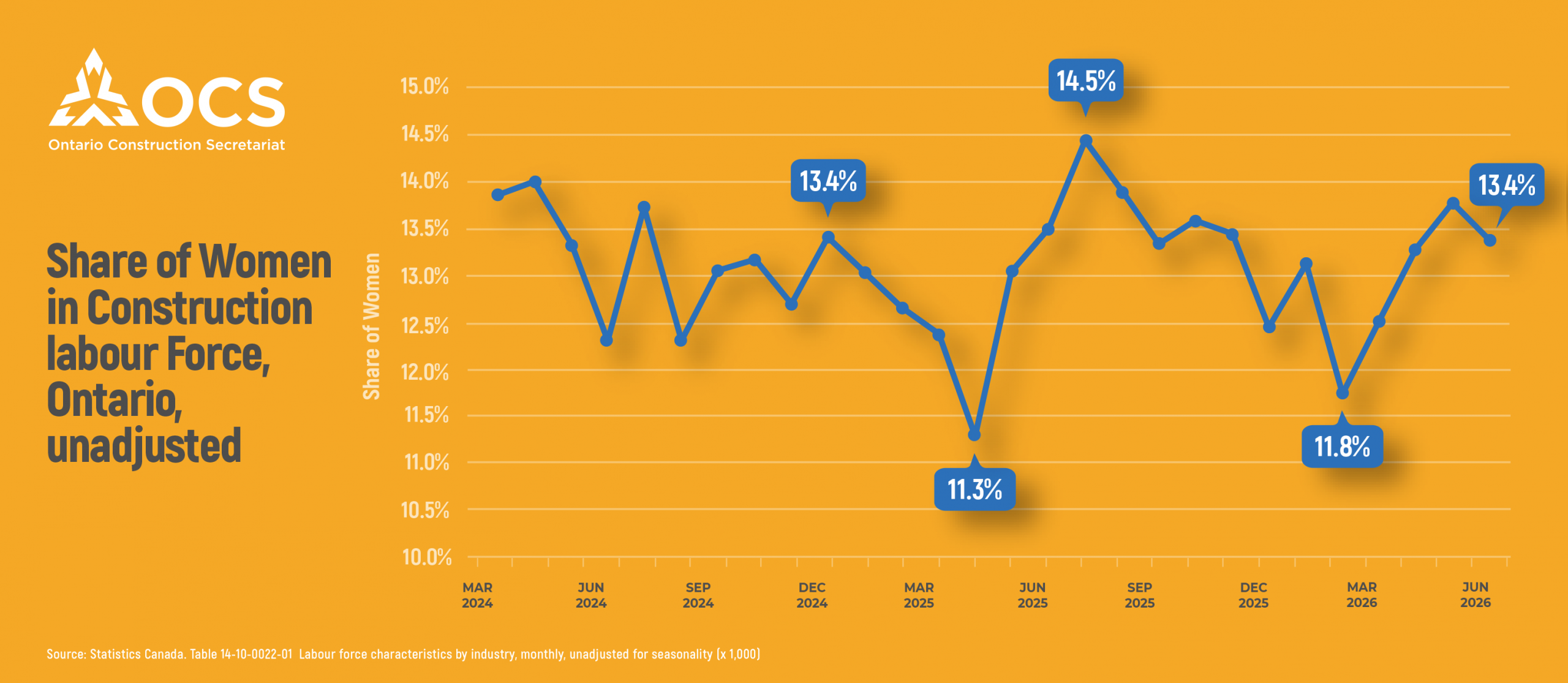
Women accounted for 13.4% of Ontario’s construction labour force in June, up 1.3 percentage points from March and nearly unchanged from one year ago.
Approximately 8,800 more women participated in the construction labour force during the second quarter, while the number of women employed increased by 9,200.
As a result, the unemployment rate for women in construction fell to 5.3% in June, down from 6.8% in March.
____________________________
FOR MORE INFORMATION, CONTACT:
Gargi Bharti
Economic and Research Project Lead
Ontario Construction Secretariat (OCS)
180 Attwell Drive, Suite 360, Toronto, ON M9W 6A9
P 416.620.5210
gbharti@iciconstruction.com