

March 17, 2026
SUMMARY
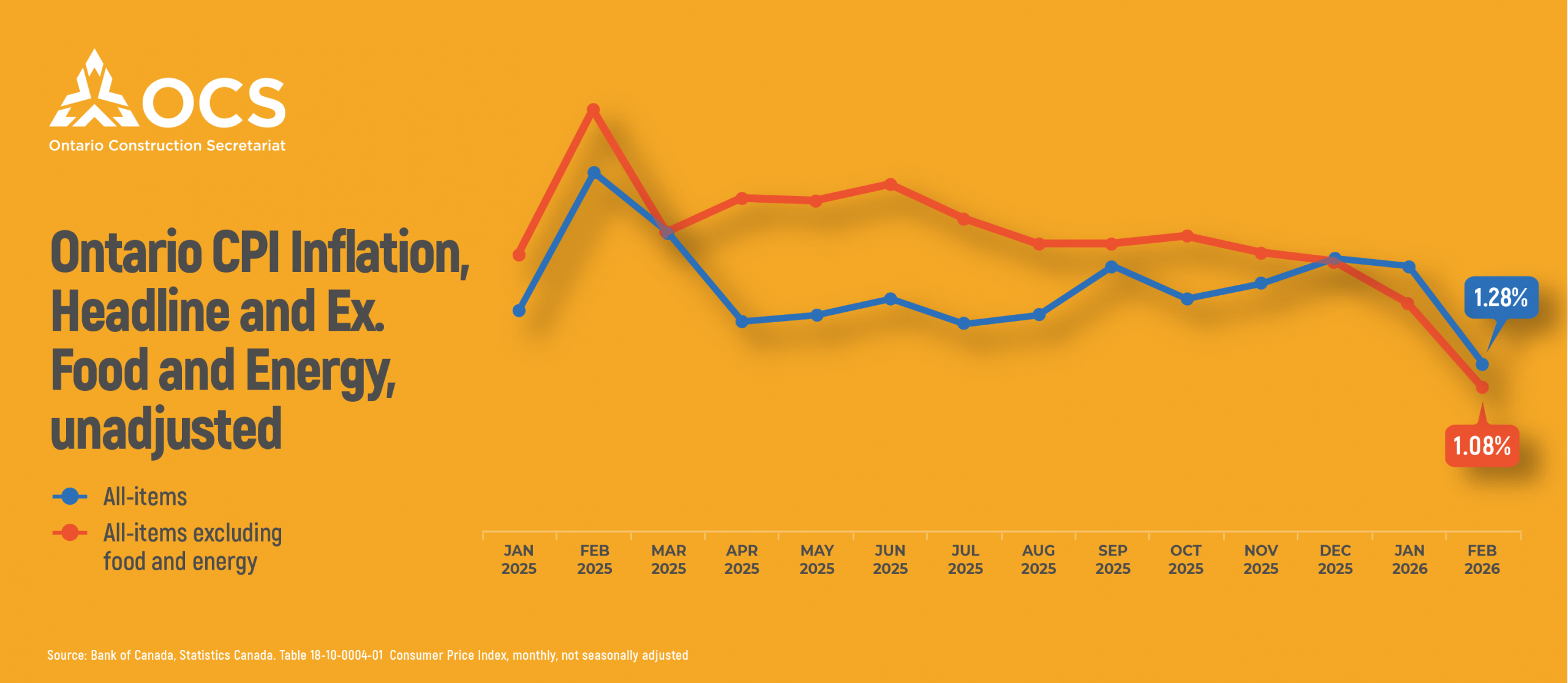
Ontario’s inflation slowed to 1.3% in February, while core inflation declined to 1.08%, marking the third consecutive monthly drop. The moderation was largely driven by a decline in food inflation due to base-year effects from the end of the GST/HST relief period in February 2025. Shelter inflation also eased as rents fell in Toronto. At the same time, energy prices showed early upward pressure linked to rising crude oil prices, which may become more visible in the next CPI release.
ONTARIO’S CONSUMER PRICE INDEX
According to the latest CPI data, Ontario’s headline (all-items) inflation fell to 1.3% in February, continuing the decline seen in January. Core inflation, which excludes food and energy, also fell for the third consecutive month to 1.08%.
The recent disinflation is largely due to base-year effects. Prices were elevated in February 2025 because the GST/HST relief period ended in mid-February. This pushed prices up at that time and now lowers the year-over-year comparison for February 2026.
At the regional level, Toronto, Ottawa, and Thunder Bay all recorded declines in all-items CPI, consistent with the broader provincial moderation. Inflation rates were 0.96% in Toronto, 1.88% in Ottawa, and 2.1% in Thunder Bay. Thunder Bay had seen an increase last month but returned to the provincial trend in February.
Toronto also recorded deflation in shelter prices, with shelter inflation at -0.6%. This was mainly due to falling rents.
Given the continued moderation in inflation, the Bank of Canada is expected to keep its benchmark policy rate unchanged at 2.25%. However, uncertainty in global oil markets due to ongoing tensions in the Middle East may influence inflation in the coming months. The next CPI release will be important because it will capture the full effect of rising crude oil prices and the fading base-year effects from the GST/HST relief period.
INFLATION BY COMPONENT
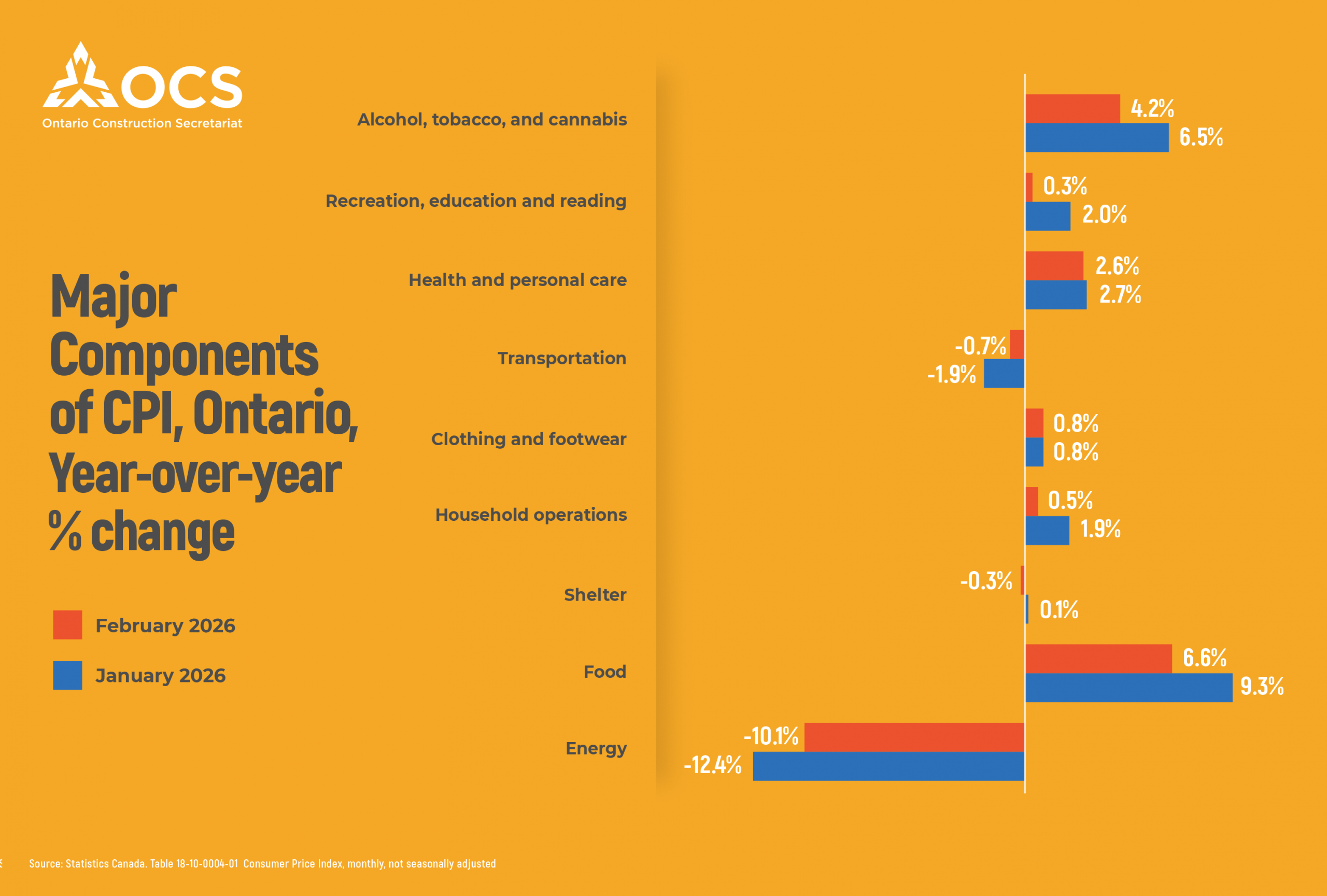
Food inflation fell sharply by 2.7 percentage points to 6.6%, making it a major contributor to the overall decline in inflation. The end of the GST/HST relief on February 15, 2025 caused price increases for some products during that month. As a result, the year-over-year comparison for February 2026 shows lower inflation. These temporary distortions are expected to disappear in the next CPI release.
Shelter prices fell by 0.3% compared with January, mainly because of declining rents. Rental inflation slowed to 1.3% in February, compared with 2.0% in January. Two years ago, rent inflation was in the 7 to 8% range. February also marked the first time since 2022 that rental inflation fell below 2%.
While most major components showed moderation, energy (-10.1%) and transportation (-0.7%) recorded increases in inflation compared with the previous month, although both remain negative on a year-over-year basis. This rise is mainly linked to higher crude oil prices and supply disruptions related to tensions in the Middle East. In particular, gasoline prices increased by 3.8% compared with January, which pushed year-over-year gasoline inflation from -18.2% in January to -14.4% in February. These pressures are likely to appear more clearly in the next CPI release since the tensions intensified toward the end of February.
Energy inflation remains negative partly due to distortions from the removal of the federal consumer carbon tax last April. These base effects are expected to remain in the data until May.
 ____________________________
FOR MORE INFORMATION, CONTACT:
Gargi Bharti
Economic and Research Project Lead
Ontario Construction Secretariat (OCS)
180 Attwell Drive, Suite 360, Toronto, ON M9W 6A9
P 416.620.5210
gbharti@iciconstruction.com