


July 24, 2026
SUMMARY
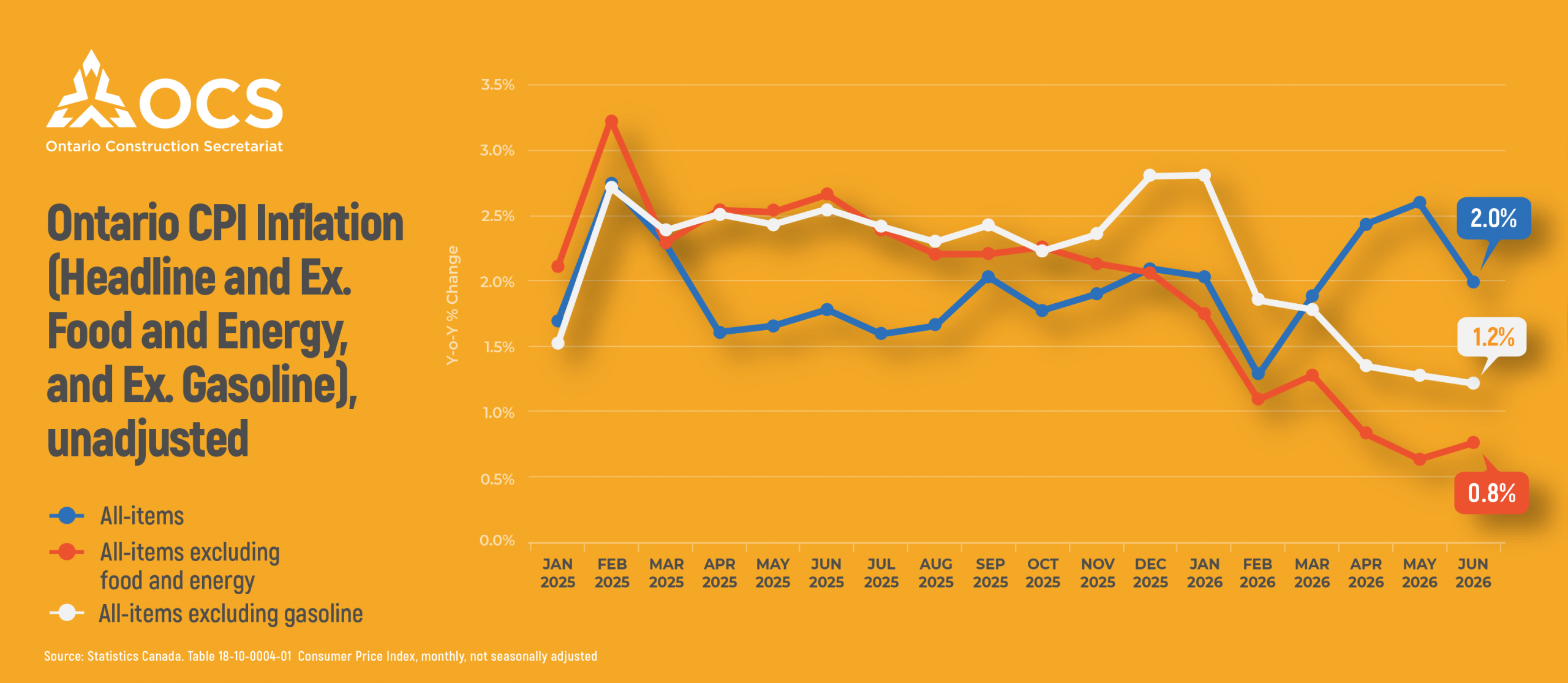
Ontario’s inflation rate eased to 2.0% in June, down from May, mainly because gasoline prices increased at a slower pace than they did a year earlier. Core inflation edged up slightly but remained low, suggesting underlying price pressures are still relatively contained. The Bank of Canada is expected to keep interest rates unchanged as it balances inflation risks with ongoing economic uncertainty.
INFLATION SLOWS IN JUNE
Ontario’s overall inflation rate fell to 2.0% in June after increasing since March. While headline inflation moved lower, core inflation, measured as CPI excluding food and energy prices, increased slightly to 0.8% from 0.6% in May. However, core inflation rate remained below the levels seen over past 5 years, suggesting that underlying inflation pressures are still relatively contained.
The slowdown in headline inflation was mainly driven by gasoline prices, which increased at a slower rate than they did a year ago. Excluding gasoline, inflation eased to 1.2% in June from 1.3% in May.
Ontario’s major cities also recorded lower inflation rates. Inflation was 1.7% in Toronto, 2.8% in Ottawa, and 2.7% in Thunder Bay.
ENERGY PRICES CONTINUE TO DRIVE INFLATION
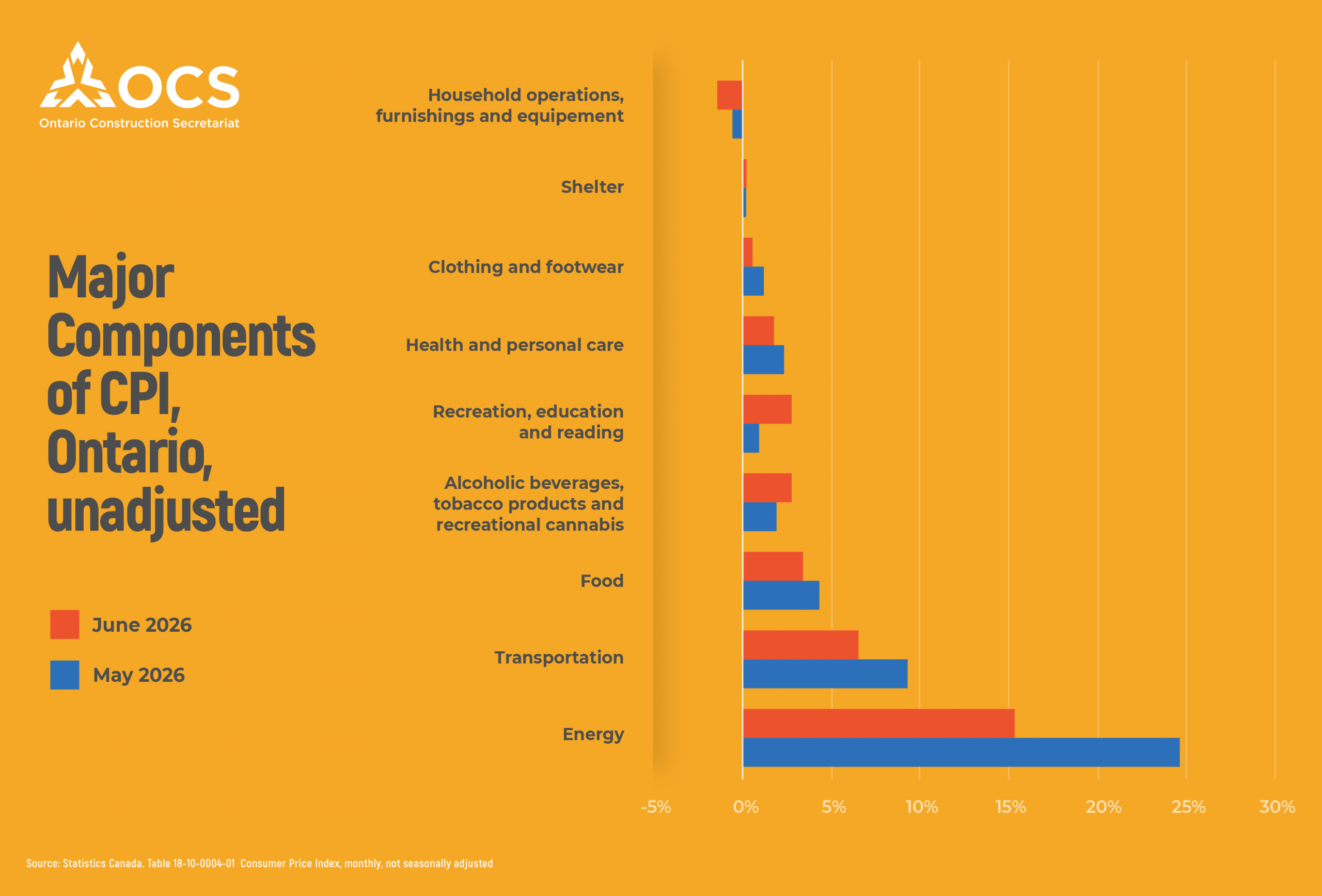
Energy prices increased by 15.4% in June, down from 24.7% in May.
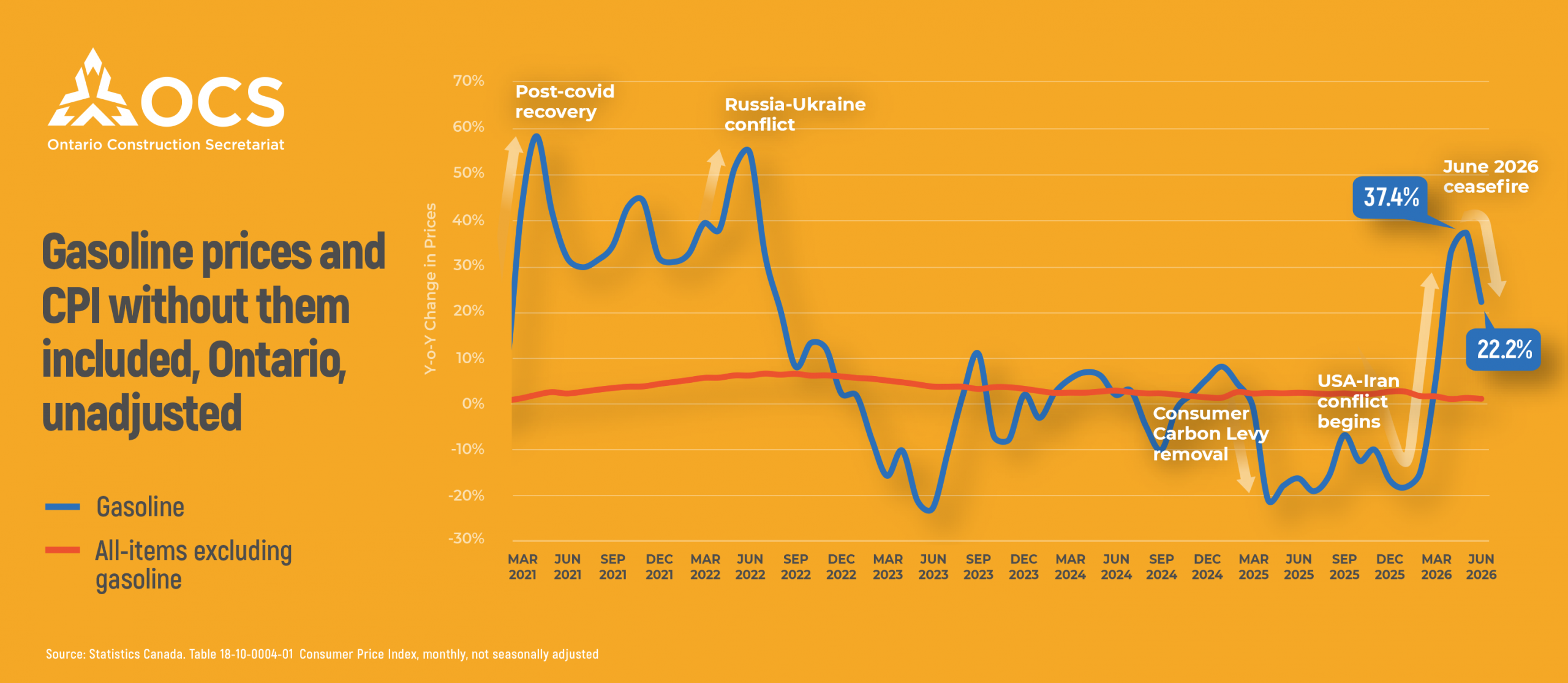
Gasoline prices remained higher than a year ago because of conflict in the Middle East. However, diplomatic talks and a temporary ceasefire helped ease global oil prices during June. As a result, gasoline prices fell 11.2% from May, although they remained 22.2% higher than a year earlier.
This was the largest month over month decline in gasoline prices since April 2025, when prices fell following the removal of the federal consumer carbon levy, according to Statistics Canada.
Outside of energy, inflation pressures continued to ease.
 OTHER COMPONENTS
Lower gasoline prices also helped reduce transportation costs. Transportation inflation slowed to 6.5% in June from 9.3% in May.
Food inflation also eased, falling to 3.4% in June from 4.3% in May.
Shelter inflation remained stable at 0.2%. Rent inflation eased to 2.2% in June from 2.4% in May.
Prices declined in most major categories compared with the previous month. The main exceptions were psychoactive substances and education and recreation. Travel services recorded a notable increase, with prices rising 19% year over year, partly due to increased demand during the FIFA World Cup matches hosted in Toronto.
OUTLOOK FOR INTEREST RATES
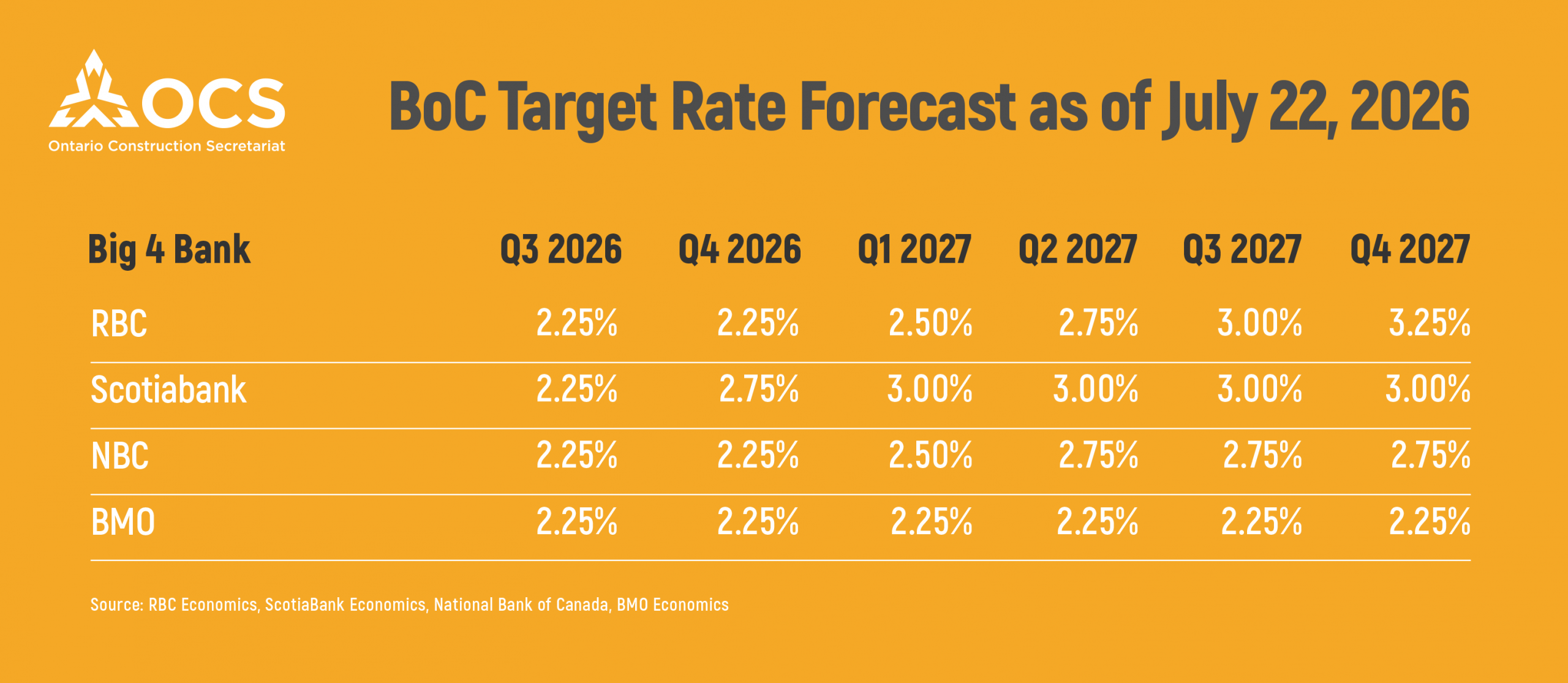
The Bank of Canada has kept its overnight interest rate at 2.25% for the past six policy meetings.
Lower energy inflation in June reflected easing oil prices following diplomatic efforts in the Middle East. However, renewed tensions in July have increased inflation risks. At the same time, stronger than expected GDP growth in April reduced recession concerns, but trade uncertainty continues to weigh on the economic outlook.
With inflation risks still present and economic growth expected to remain modest, the Bank of Canada is widely expected to keep interest rates unchanged for now.
Most of Canada’s Big Four banks currently expect the policy rate to remain unchanged through the rest of 2026. They forecast gradual rate increases of 25 to 50 basis points beginning in early 2027.
 ____________________________
FOR MORE INFORMATION, CONTACT:
Gargi Bharti
Economic and Research Project Lead
Ontario Construction Secretariat (OCS)
180 Attwell Drive, Suite 360, Toronto, ON M9W 6A9
P 416.620.5210
gbharti@iciconstruction.com