


October 27, 2026
SUMMARY
Ontario’s annual inflation rate increased slightly to 2.5% in September 2026, up from 2.4% in August. Higher gasoline prices continued to put upward pressure on inflation, while price increases across most other major categories remained relatively moderate.
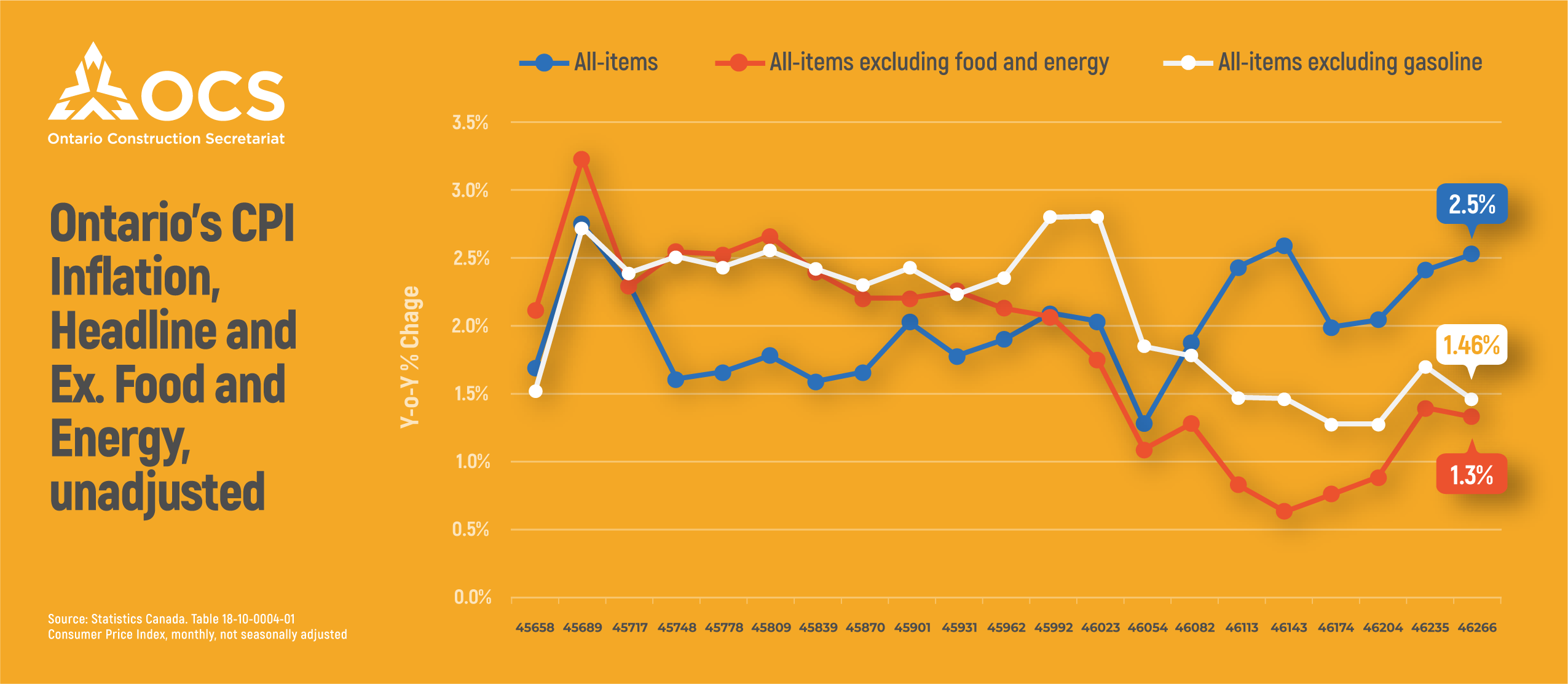
Inflation excluding gasoline stood at approximately 1.5%, well below the headline rate. Core inflation, excluding food and energy, also eased slightly, suggesting that broader price pressures remained relatively contained.
PROVINCIAL OVERVIEW
Ontario’s Consumer Price Index (CPI) increased 2.5% year over year in September 2026, following a 2.4% increase in August.
Higher gasoline prices continued to be a major contributor to inflation. However, price increases across other major CPI components remained relatively modest.
Core inflation, measured here as CPI excluding food and energy, edged down to 1.3% in September from 1.4% in August, suggesting that broader price pressures were relatively contained.
Inflation excluding gasoline stood at 1.5% in September, compared with the headline inflation rate of 2.5%.
Similarly, inflation excluding gasoline stood at approximately 1.5%, compared with headline inflation of 2.5%.
Among Ontario’s major cities, annual inflation was 2.1% in Toronto, 3.0% in Ottawa and 2.8% in Thunder Bay.
ENERGY PRICES CONTINUE TO DRIVE INFLATION
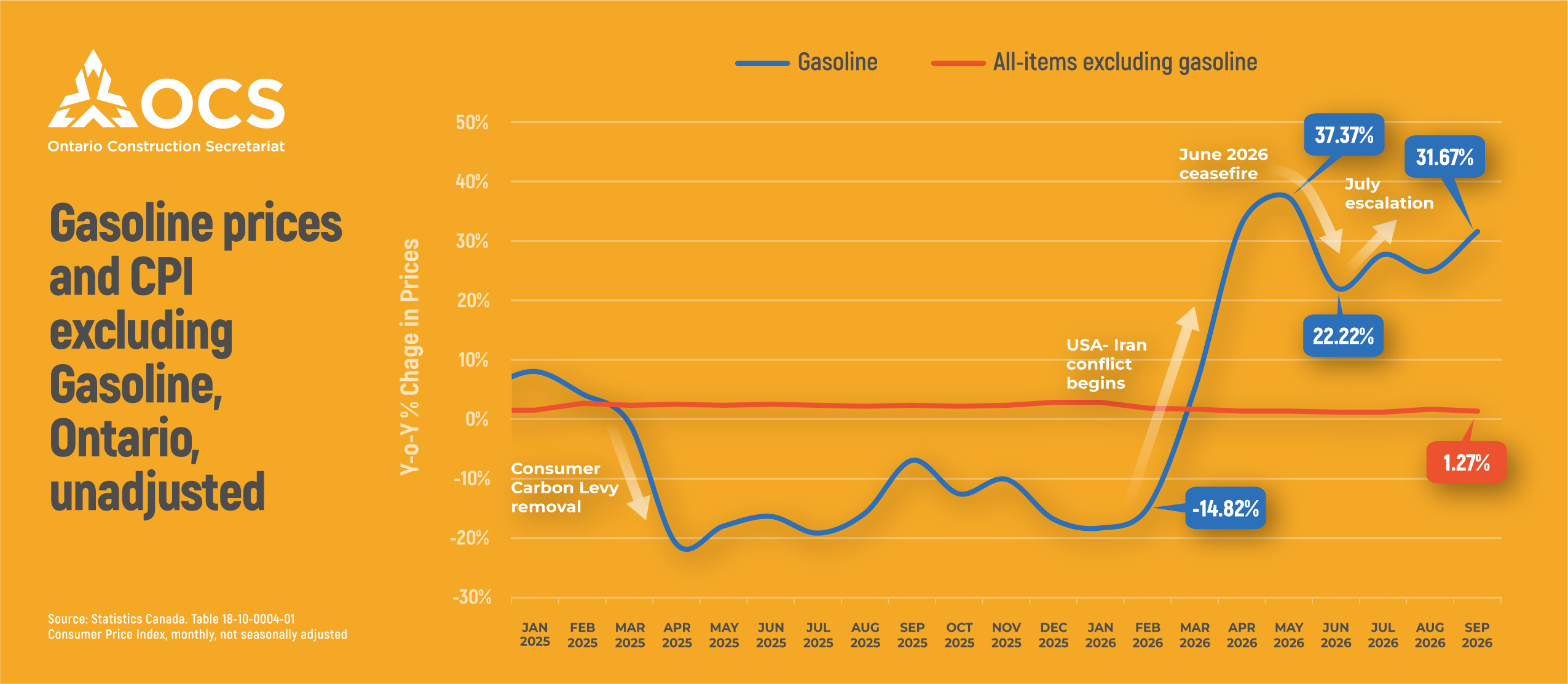
Energy prices remained a major source of inflation in September, rising 19.5% from a year earlier, compared with 15.2% in August.
Crude oil prices also increased during the month, reaching their highest level since May amid continued uncertainty surrounding conflicts in the Middle East. This contributed to higher gasoline and fuel oil prices.
Gasoline prices rose 7.8% from August and were 31.7% higher than a year earlier, making them a key contributor to the increase in energy costs.
The influence of gasoline is also reflected in the broader CPI figures. Excluding gasoline, Ontario’s annual inflation rate was approximately 1.5% in September, compared with headline inflation of 2.5%.
OTHER CPI COMPONENTS
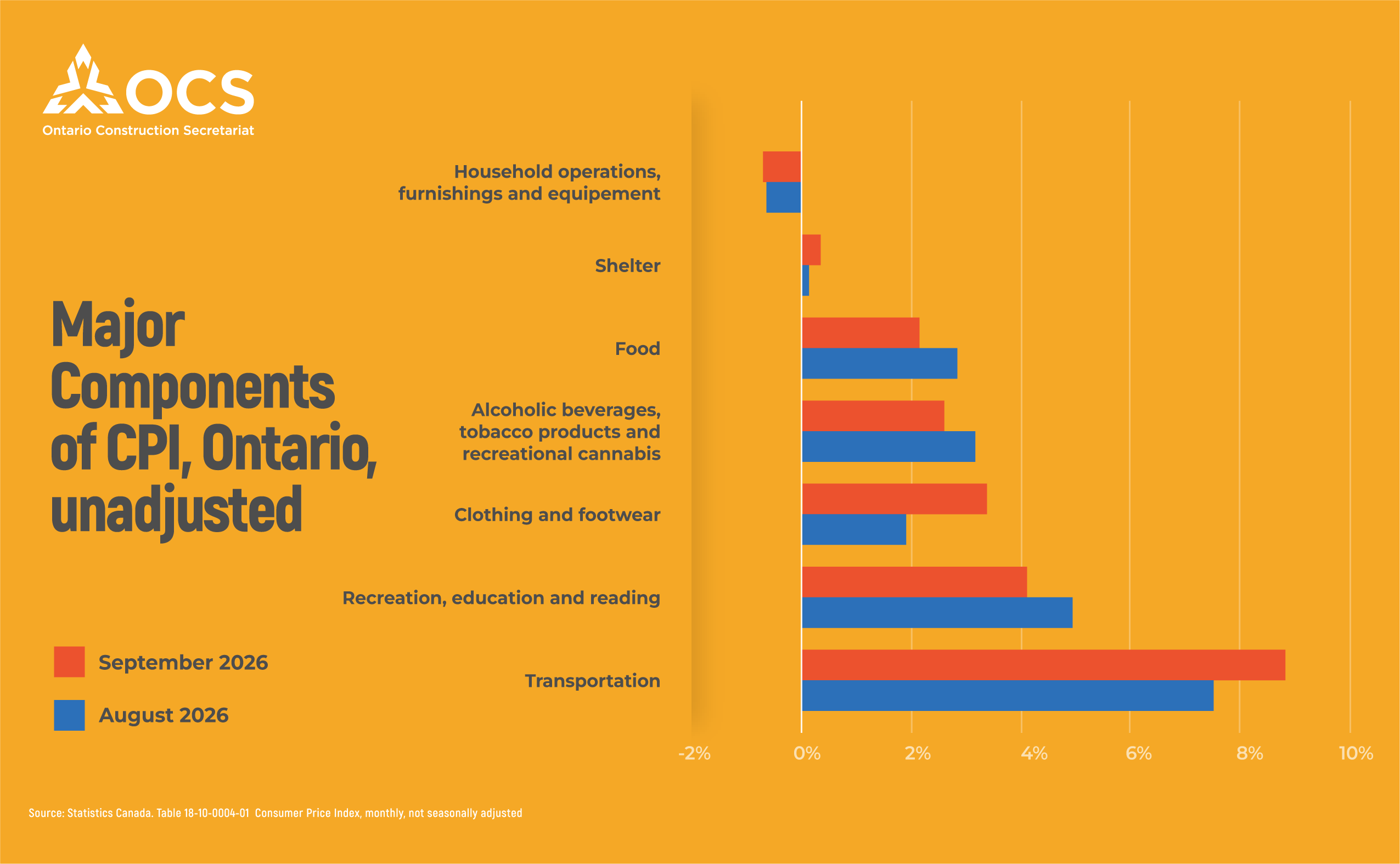
Price movements varied across Ontario’s major CPI categories in September.
Transportation prices rose 8.6% from a year earlier, largely reflecting higher gasoline prices.
Food inflation eased to 2.1% in September from 2.8% in August, bringing it below Ontario’s overall inflation rate of 2.5%.
Shelter prices increased by just 0.3% year over year. Within this category, rent prices rose 2.0%, slowing from the 2.4% increase recorded in August.
Prices also increased across most other major CPI categories, although the increases were generally modest compared with transportation.
OUTLOOK FOR INTEREST RATES
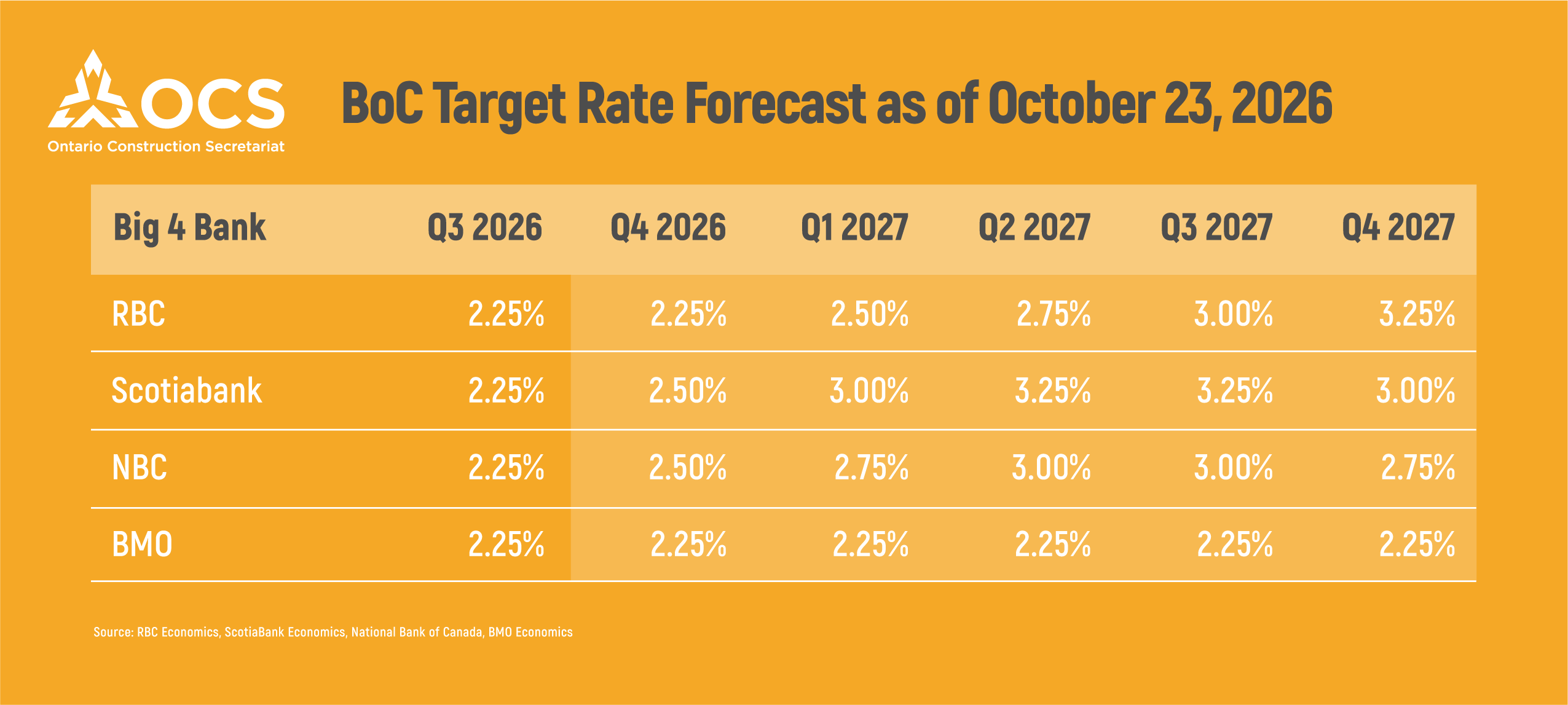
The Bank of Canada has maintained its overnight policy rate at 2.25% for seven consecutive policy meetings.
While another rate hold is widely expected at the upcoming October 28 announcement, some economists and market participants have begun considering the possibility of higher interest rates if inflation pressures persist.
Although higher gasoline prices have contributed to headline inflation, broader price pressures remain relatively contained. However, the Bank of Canada’s latest business survey suggests that businesses are anticipating higher prices, adding uncertainty to the inflation outlook.
Forecasts from major Canadian banks also point to differing expectations. RBC and BMO project the policy rate to remain at 2.25% through the end of 2026, while Scotiabank and National Bank anticipate an increase to 2.50%.
____________________________
FOR MORE INFORMATION, CONTACT:
Gargi Bharti
Economic and Research Project Lead
Ontario Construction Secretariat (OCS)
180 Attwell Drive, Suite 360, Toronto, ON M9W 6A9
P 416.620.5210
gbharti@iciconstruction.com