


May 4, 2026
SUMMARY
Non-residential construction costs in Ontario continued to rise in Q1 2026, but growth slowed compared to late 2025. Industrial construction remains the main source of cost pressure, while institutional building costs show limited movement. Input cost pressures persist in key divisions such as steel and plumbing, though quarterly changes suggest stabilization.
NON-RESIDENTIAL BUILDING CONSTRUCTION PRICE INDEX
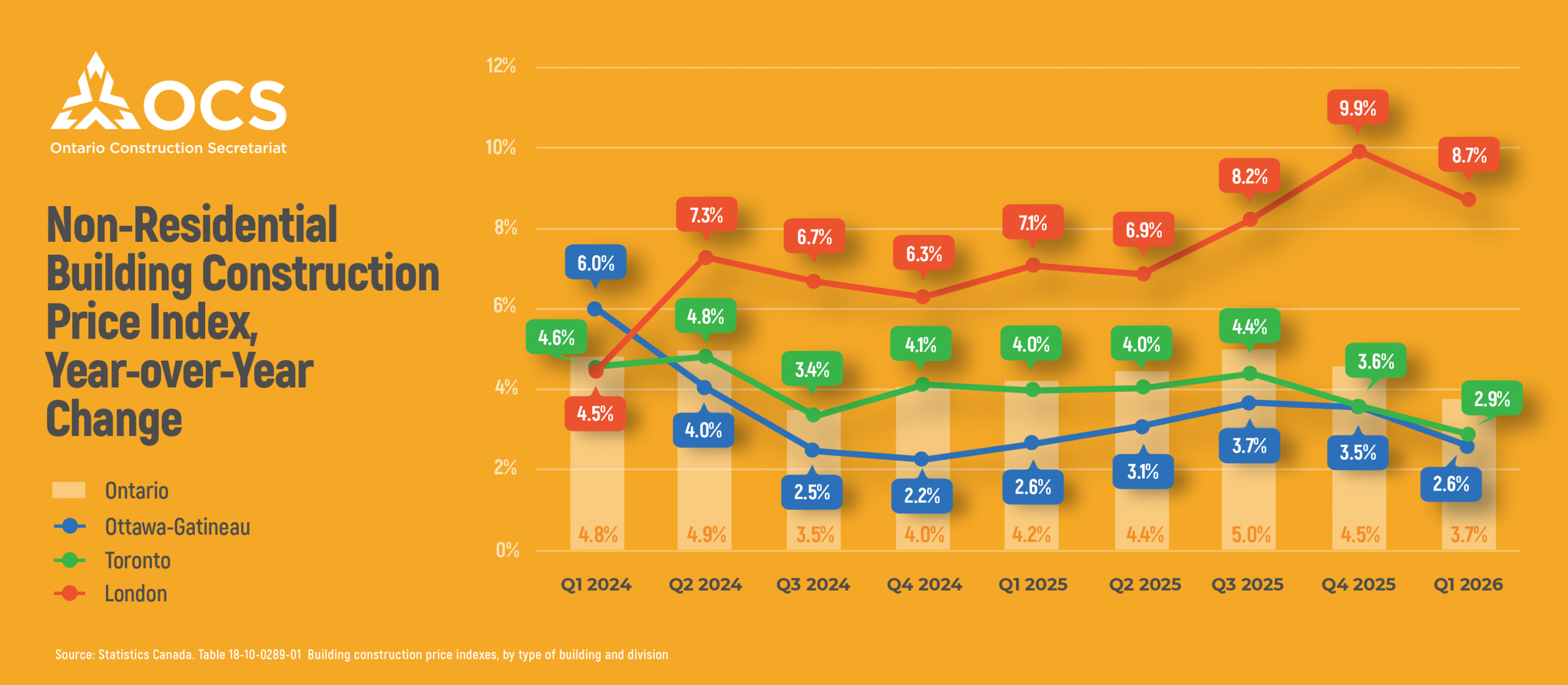
Non-residential construction prices in Ontario increased by 3.7% year over year in Q1 2026, with a modest quarterly gain of 0.27%. This represents a slowdown from the previous quarter, indicating that cost pressures are beginning to stabilize.
Regional trends were mixed. Ottawa and Toronto recorded below-average growth at 2.6% and 2.9%, respectively. In contrast, London led all major markets with an 8.7% increase, marking one of the strongest gains nationally.
Higher material costs, partly linked to tariffs, continued to support elevated price levels. However, the slower quarterly growth suggests that these pressures are easing.
PRICE TRENDS WITHIN THE ICI SECTOR
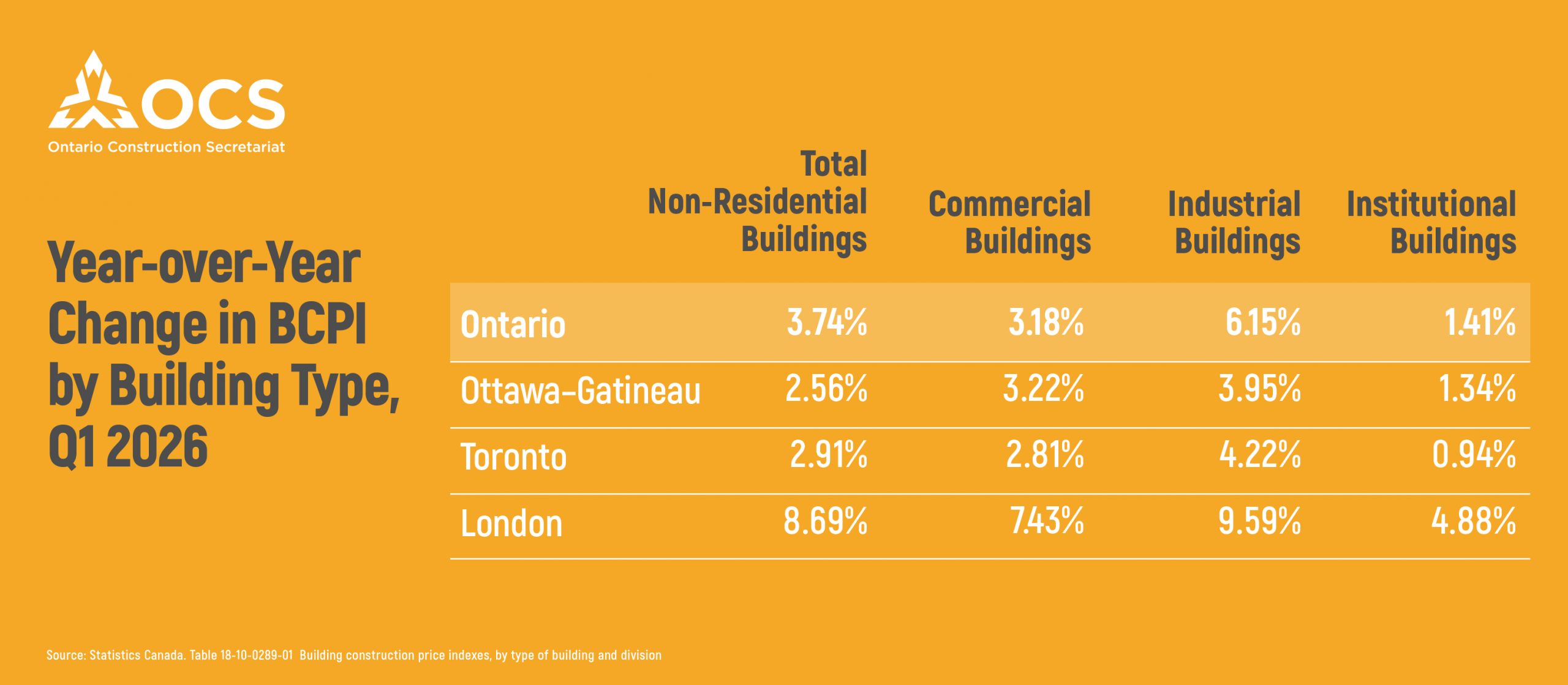
Industrial construction remains the primary driver of cost increases. Prices rose by 6.8% year over year, supported by a 6.3% increase in factory construction costs.
Commercial construction posted moderate growth of 3.9%, with warehouse construction acting as the main contributor at 4.8%.
Institutional construction continues to lag, with prices increasing by only 1.4%, reflecting weaker cost pressures in this segment.
COST CHANGES BY CONSTRUCTION DIVISION
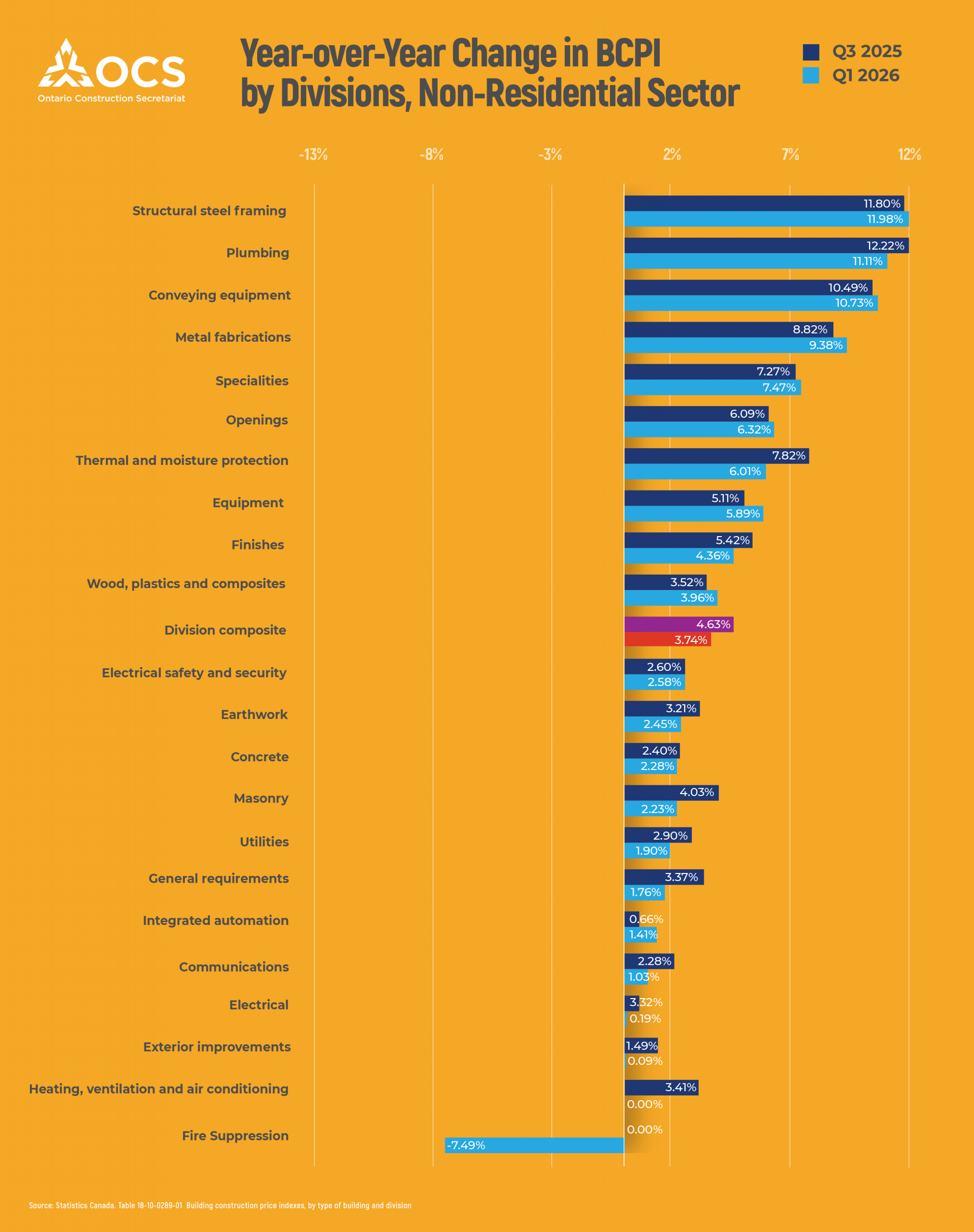
At the division level, cost increases remain concentrated in a few areas.
Structural steel framing recorded the largest increase at 11.9% year over year. Plumbing followed at 11.1%, while conveying equipment rose by 10.7%. Metal fabrication costs also remained elevated.
In contrast, several divisions showed little movement. HVAC, exterior improvements, electrical work, and communications recorded minimal changes. Fire suppression was the only category to decline, falling by 7.5%.
On a quarterly basis, price movements were limited. The overall composite index declined slightly by 0.3%, reinforcing signs of stabilization.
Conveying equipment recorded the largest quarterly increase at 2.6%. Fire suppression saw the sharpest decline, down 13.9% since Q4 2025.
____________________________
FOR MORE INFORMATION, CONTACT:
Gargi Bharti
Economic and Research Project Lead
Ontario Construction Secretariat (OCS)
180 Attwell Drive, Suite 360, Toronto, ON M9W 6A9
P 416.620.5210
gbharti@iciconstruction.com