


May 22, 2026
SUMMARY
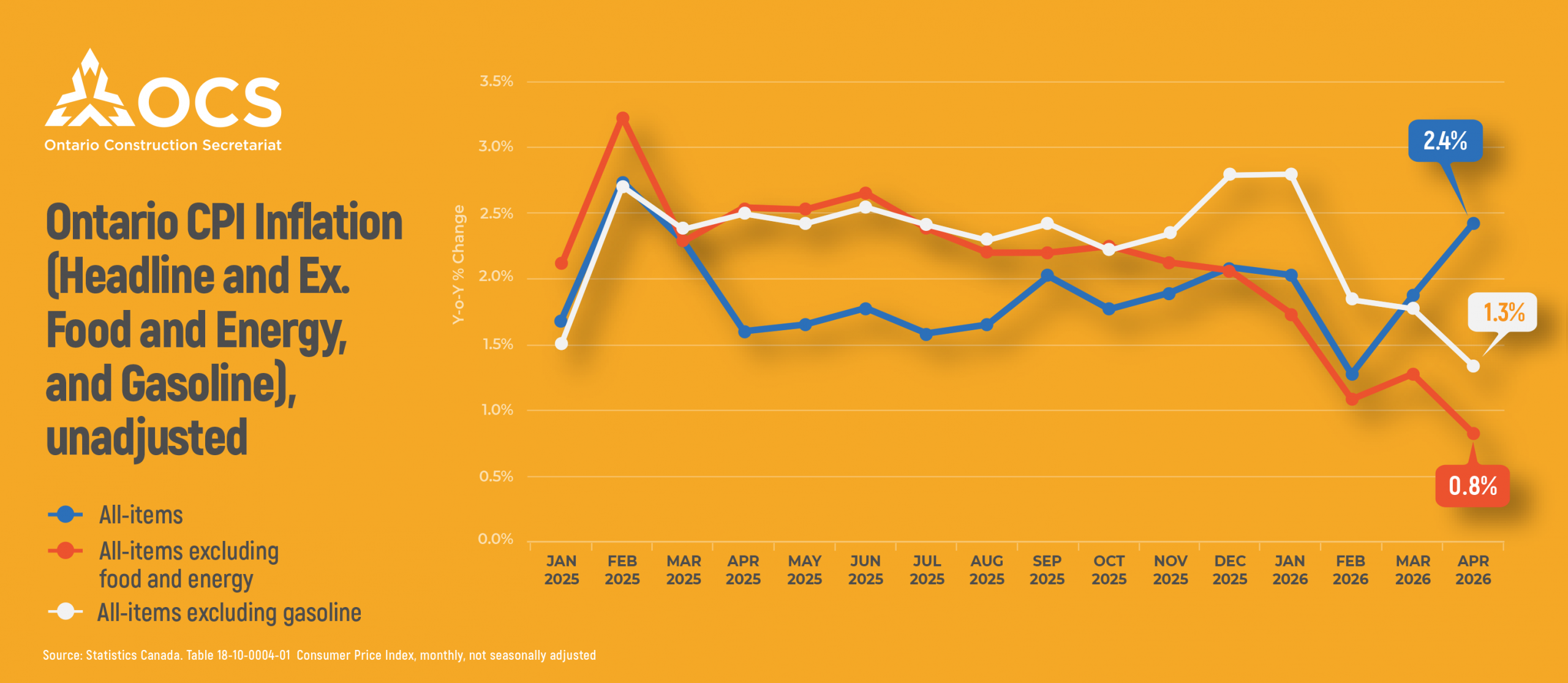
Ontario’s inflation rate rose to 2.4% in April as gasoline and energy prices surged amid ongoing tensions in the Middle East. However, inflation pressures beneath the surface continued to ease, with core inflation falling to 0.8%. Food inflation slowed further, shelter costs remained stable, and expectations remain that the Bank of Canada will keep interest rates unchanged in June.
APRIL INFLATION UPDATE
Ontario’s overall inflation rate increased to 2.4% in April, continuing the rise seen in March. While headline inflation moved higher, core inflation, which excludes food and energy prices, declined to 0.8% after a small increase last month. This points to easing underlying inflation pressures despite the jump in energy costs.
The increase in inflation was largely driven by higher oil and gasoline prices. Concerns over global supply disruptions linked to tensions in the Middle East pushed fuel prices sharply higher during the month.
Major cities across Ontario saw a similar trend. Inflation was 1.9% in Toronto, 2.8% in Ottawa, and 3.5% in Thunder Bay, reflecting a moderate increase across the province.
ENERGY PRICES LEAD THE INCREASE
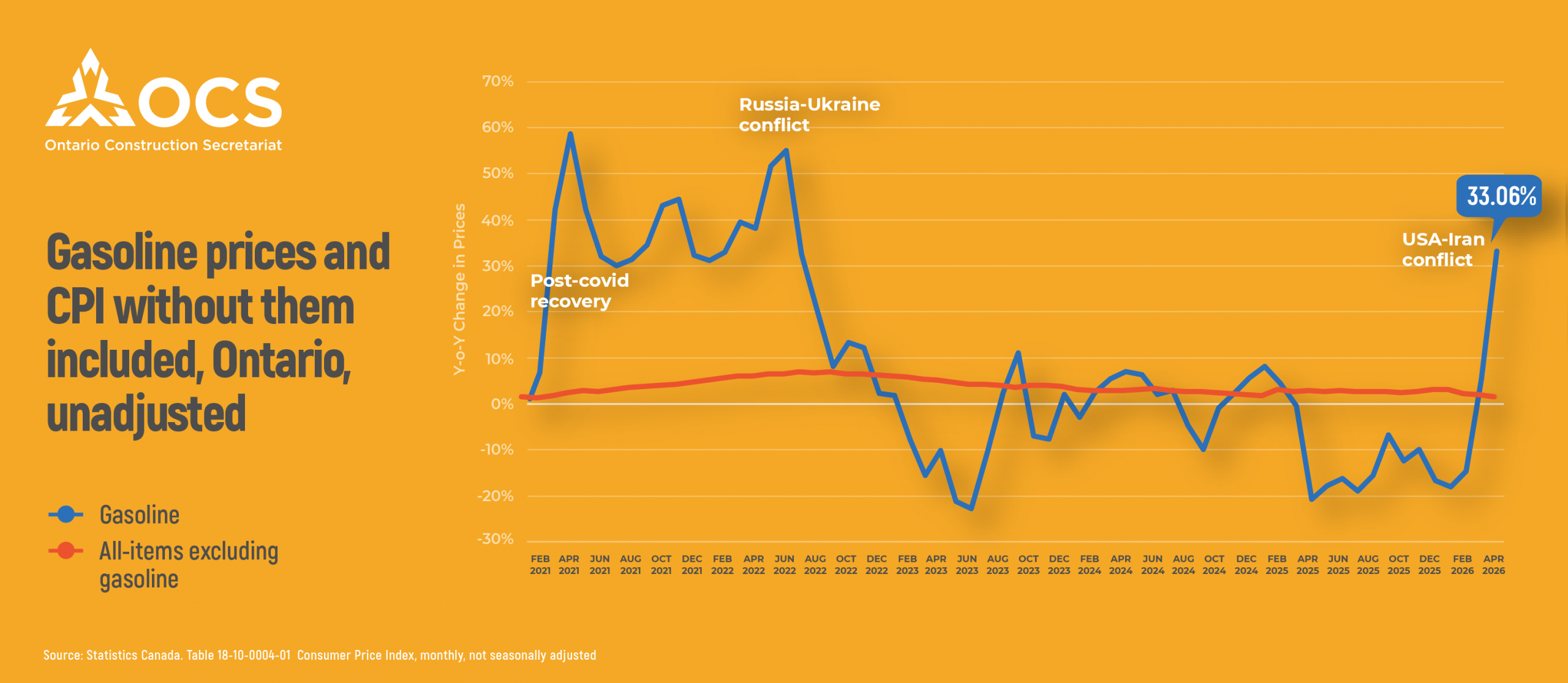
Energy prices rose by 21.7% in April, accelerating sharply from the previous month. Gasoline prices increased by 33.3% over the past two months following the escalation of the US-Iran conflict and were 33.1% higher than a year ago. Oil prices reached $108 per barrel as of May 21, 2026.
Several factors contributed to higher gasoline prices this month. The removal of the consumer carbon levy on April 1, 2025, caused prices to fall last year, making this year’s annual increase appear larger. Supply uncertainty related to the Middle East conflict and the transition to the more expensive summer fuel blend also pushed prices upward. Meanwhile, the temporary suspension of the federal fuel excise tax, which took effect on April 20, helped offset some of the increase, as noted by Statistics Canada.
Outside of energy prices, inflation pressures remained fairly moderate in April.
OTHER COMPONENTS
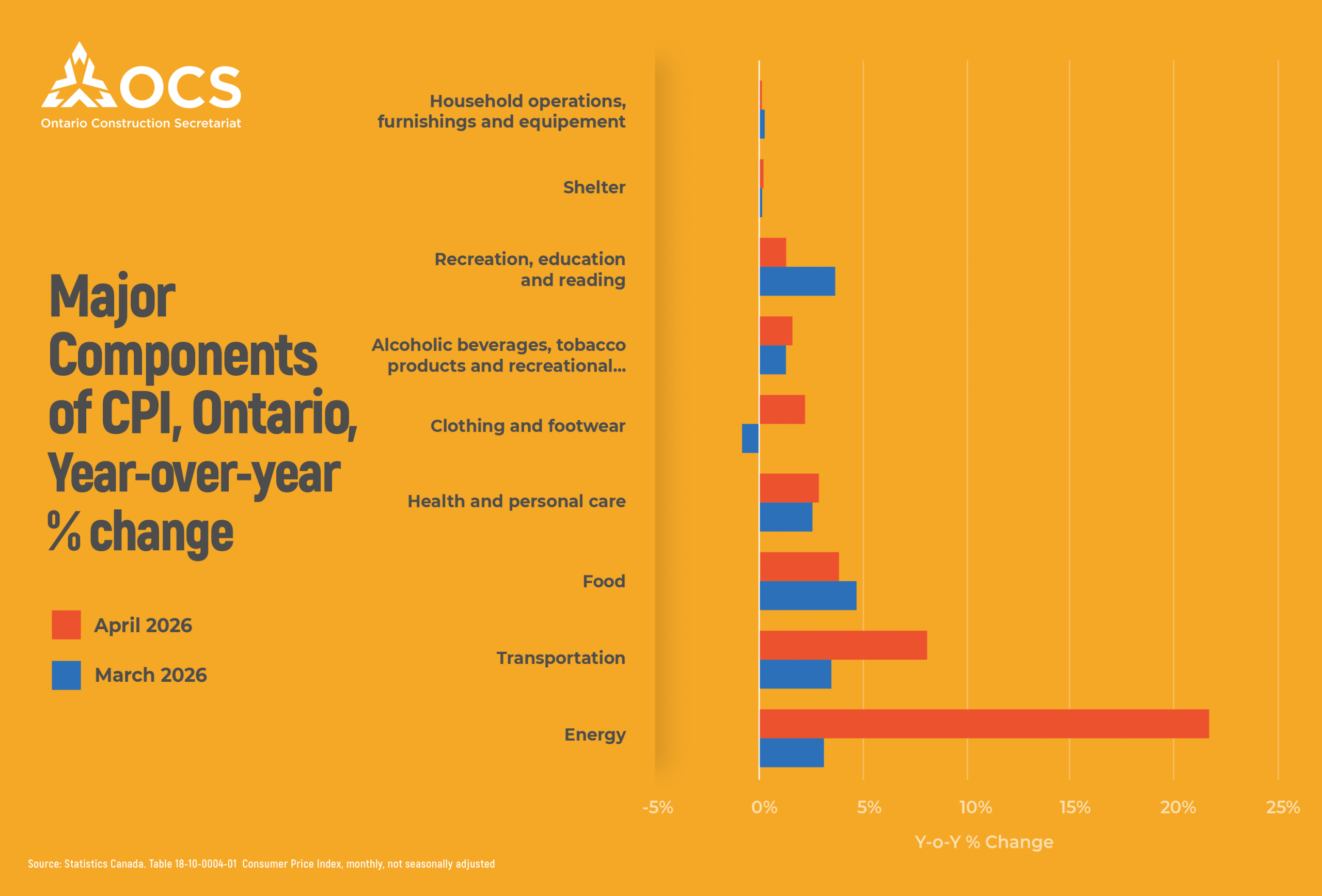
The rise in fuel prices also lifted transportation costs, which increased by 8.1%, up from 3.5% in March.
Food inflation continued to slow for the fifth straight month, falling to 3.8%, which is still elevated. Restaurant prices increased slightly during the month, while grocery prices edged lower compared with March.
Shelter costs remained stable overall, rising by just 0.2%. Rent inflation also eased, slowing to 2.2% in April from 2.9% in March.
Prices increased across most sectors since last month, while Food and Education were the only categories to record a decline.
OUTLOOK FOR INTEREST RATES
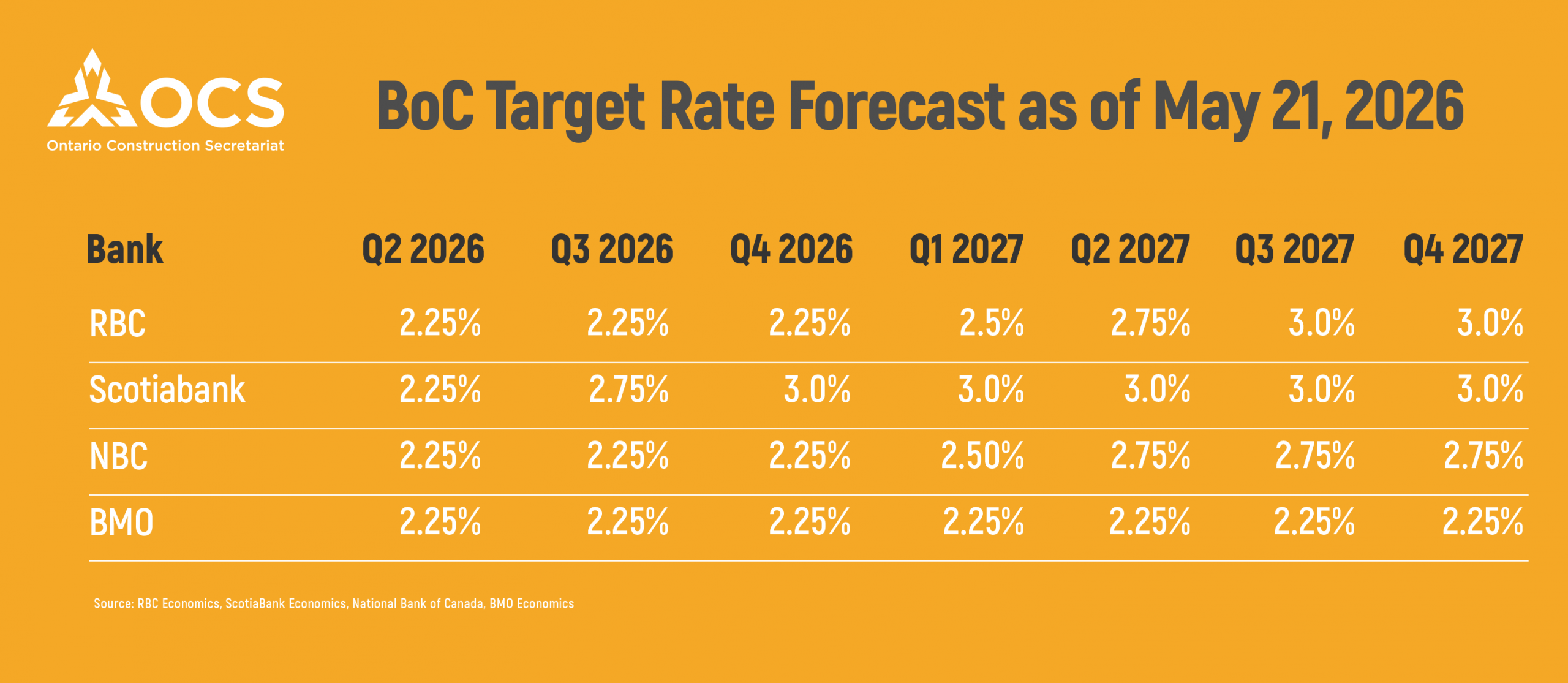
The Bank of Canada has kept its overnight interest rate unchanged at 2.25% for the past four meetings. With core inflation continuing to stabilize, markets expect the Bank to leave rates unchanged again in its upcoming June 10 announcement.
Looking ahead, interest rates are expected to remain stable through most, if not all, of 2026. Most of Canada’s Big 4 banks currently expect rates to stay unchanged over the year. Scotiabank is the exception, forecasting a 50-basis point increase in September 2026, followed by another 25-basis points increase towards the end of the year.
 ____________________________
FOR MORE INFORMATION, CONTACT:
Gargi Bharti
Economic and Research Project Lead
Ontario Construction Secretariat (OCS)
180 Attwell Drive, Suite 360, Toronto, ON M9W 6A9
P 416.620.5210
gbharti@iciconstruction.com