

August 20, 2026
SUMMARY
Ontario’s annual inflation rate stayed at 2.0% in July, the lowest among provinces.
Higher gasoline prices continued to put upward pressure on inflation, while declines in natural gas prices and homeowners’ replacement costs helped moderate overall price growth.
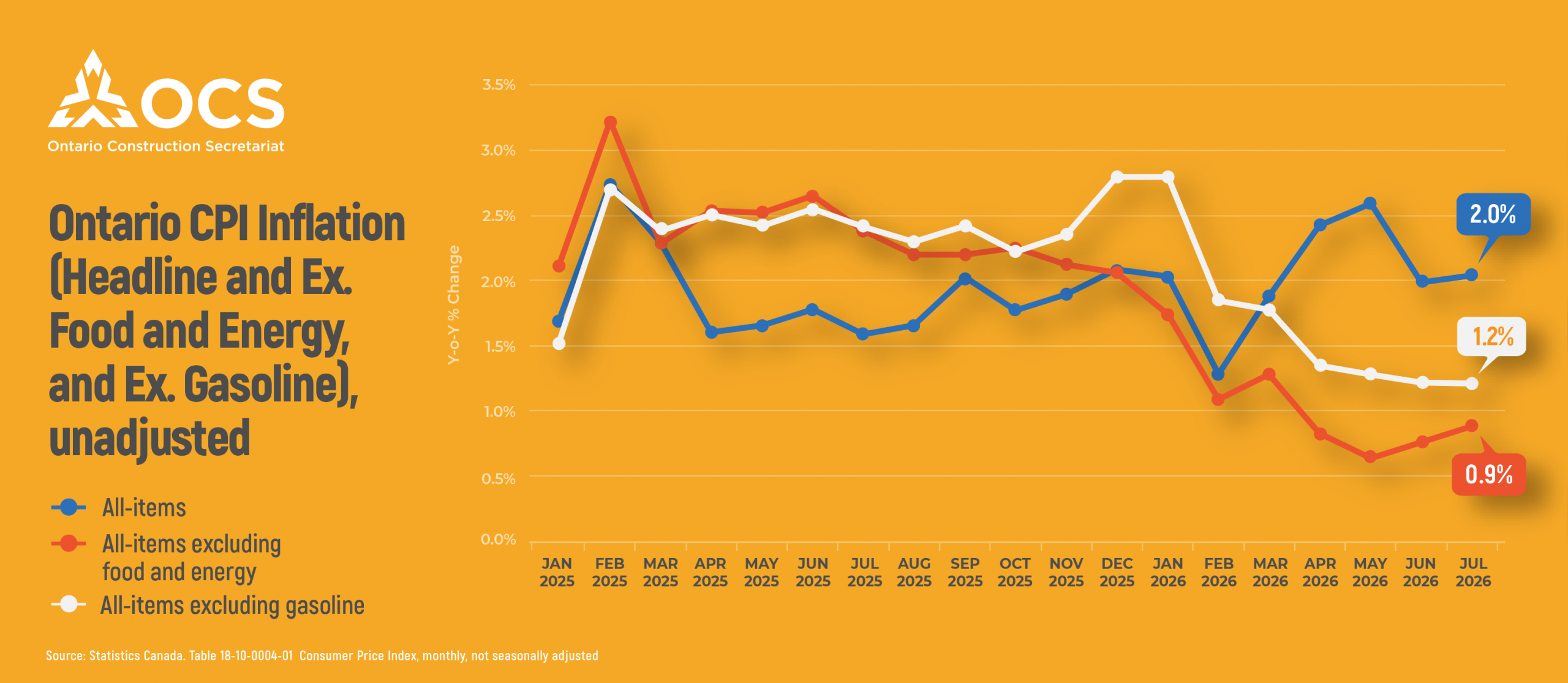
Core inflation remained subdued, rising to 0.9% excluding food and energy, while inflation excluding gasoline stayed at 1.2%.
INFLATION HOLDS IN JULY
Ontario’s Consumer Price Index (CPI) remained at 2.0% in July, unchanged from June. This was the lowest inflation rate among the provinces.
Higher gasoline prices put upward pressure on inflation during the month. However, this was offset by declines in some shelter-related costs.
Core inflation, measured as CPI excluding food and energy, edged up to 0.9% in July from 0.8% in June. Despite the increase, the rate remained below levels seen over much of the past five years, suggesting that underlying inflation pressures remain relatively contained.
Inflation excluding gasoline was 1.2% in July, well below the headline rate.
Ontario’s major cities also recorded relatively moderate inflation. Annual inflation was 1.7% in Toronto, 2.6% in Ottawa and 2.5% in Thunder Bay.
ENERGY PRICES CONTINUE TO DRIVE INFLATION
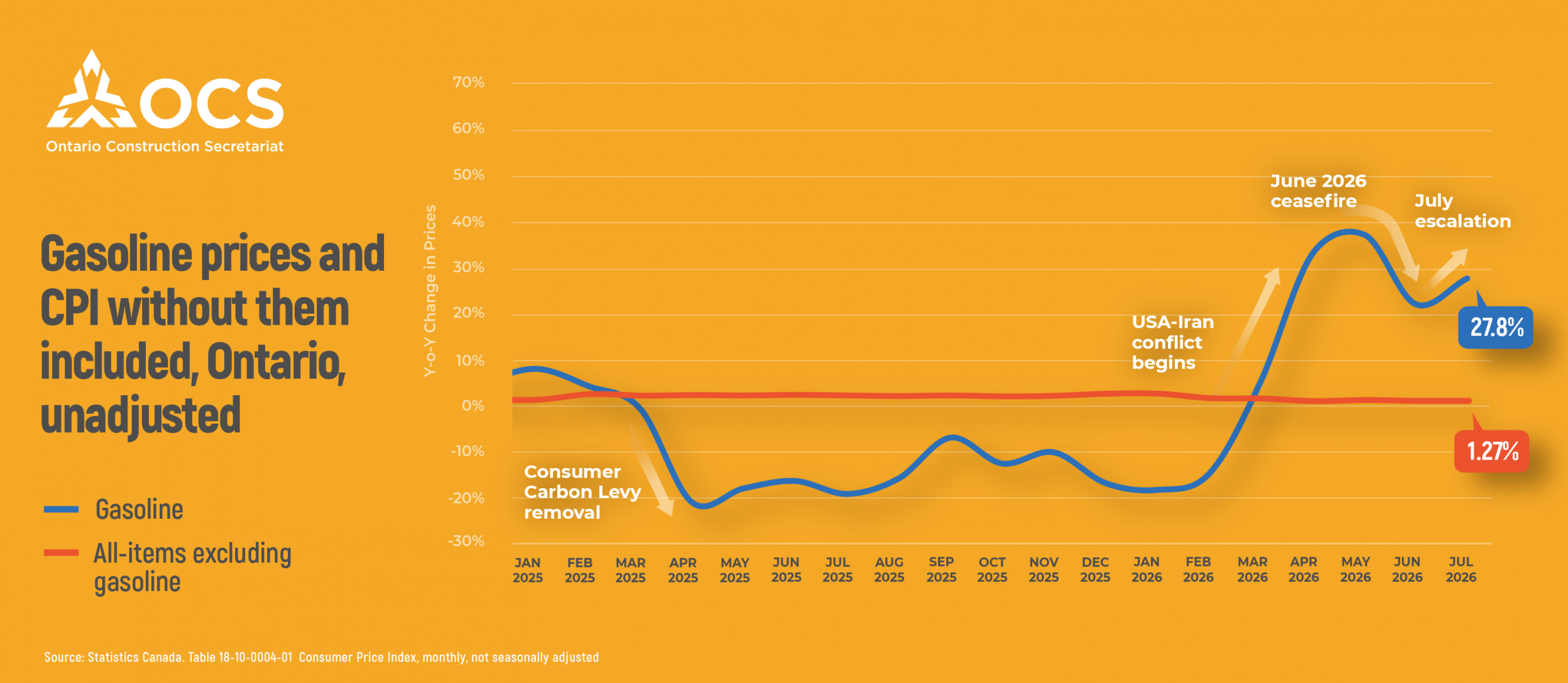
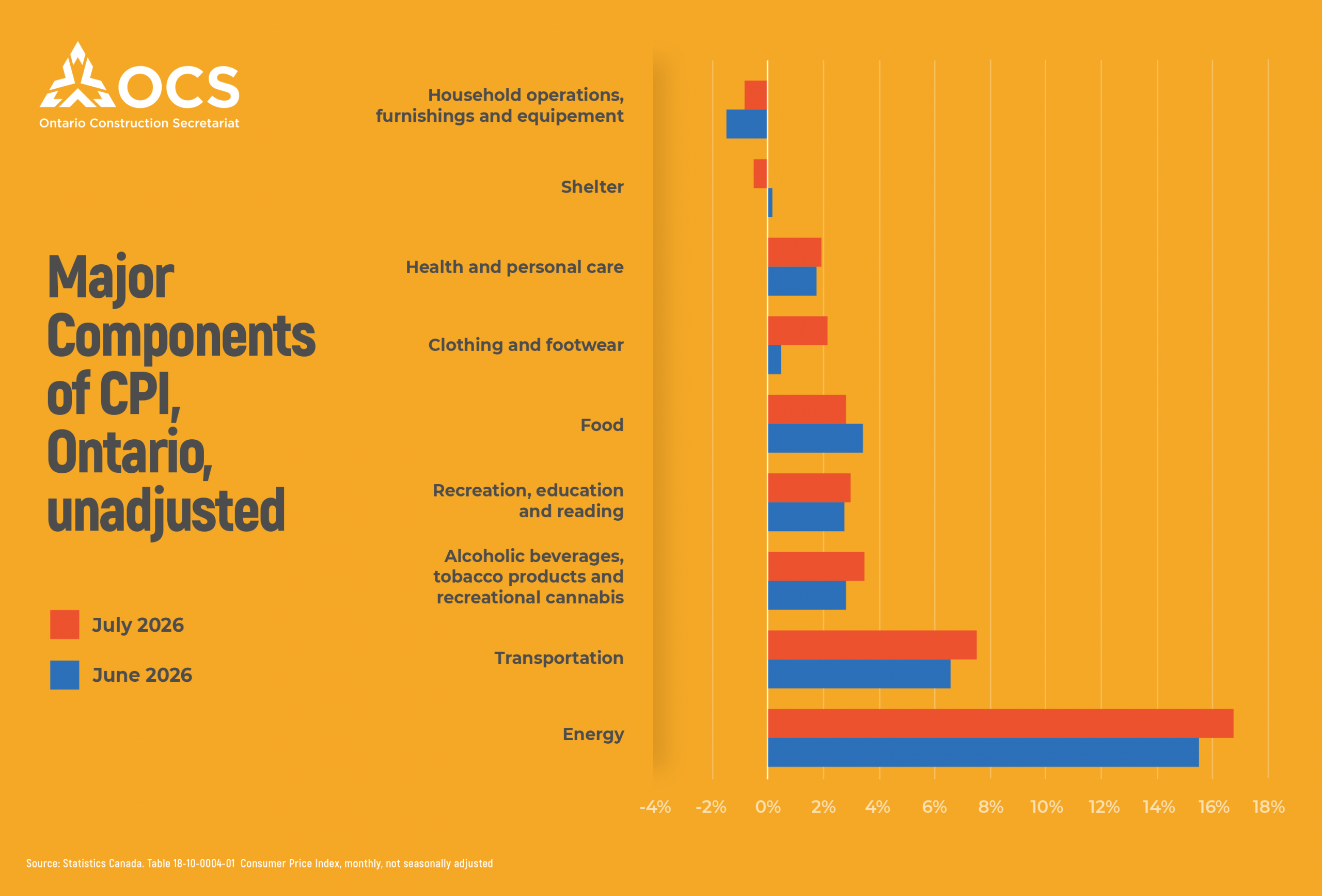
Energy prices remained a key source of inflation in July, rising 16.6% from a year earlier, up from 15.4% in June.
Gasoline prices were the main contributor to higher energy costs. Prices rose 3.9% in July and were 27.8% higher than a year earlier. This followed an 11.2% monthly decline in June.
Natural gas prices moved in the opposite direction, falling 18.7% from a year earlier and helping moderate the overall increase in energy prices.
The impact of gasoline is also reflected in the broader CPI figures. Excluding gasoline, Ontario’s inflation rate was 1.2% in July, compared with headline inflation of 2.0%.
 OTHER COMPONENTS
Price pressures varied across the major CPI components in July.
Transportation inflation remained elevated, largely reflecting higher gasoline prices.
Food inflation eased to 2.8% in July from 3.4% in June, although it remained above Ontario’s overall inflation rate of 2.0%.
Shelter prices fell 0.5% from a year earlier. Rent prices increased by only 0.7%, down from 2.2% growth in June. This was the slowest year-over-year increase in rents since 2021.
Owned accommodation costs also helped lower shelter inflation. In particular, homeowners’ replacement costs fell 4.6%, while natural gas prices declined 18.7%. According to Statistics Canada, these declines were important contributors to Ontario’s slower overall price growth.
Prices increased across most other major CPI categories, but the increases were generally modest.
OUTLOOK FOR INTEREST RATES
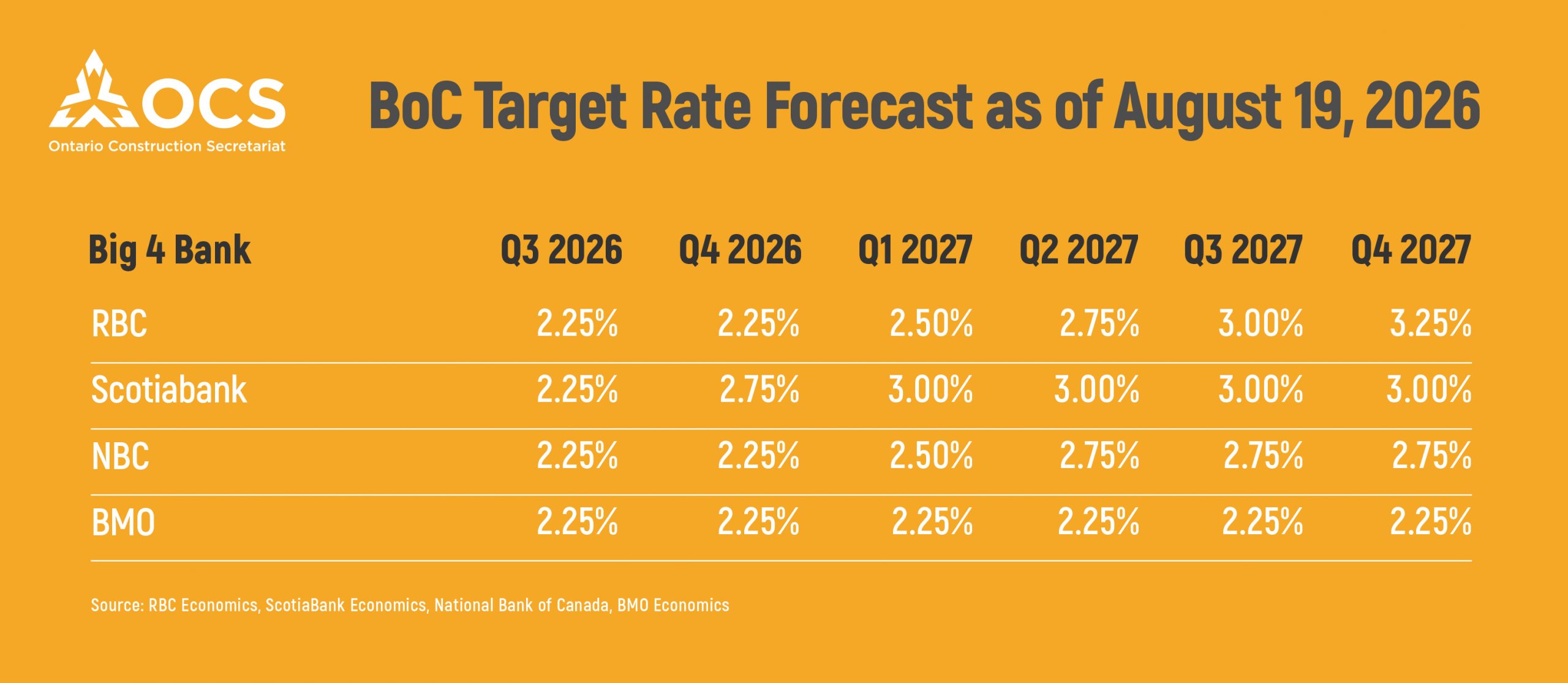
The interest rate outlook has changed little since last month. The Bank of Canada has kept its overnight policy rate at 2.25% for the past six policy meetings.
With inflation risks still present and economic growth expected to remain modest, economists generally expect the Bank of Canada to keep rates unchanged in the near term.
Three of the four major bank forecasts shown below expect interest rates to begin rising in early 2027, although the timing and pace vary. BMO expects the policy rate to remain at 2.25% throughout 2027.
 ____________________________
FOR MORE INFORMATION, CONTACT:
Gargi Bharti
Economic and Research Project Lead
Ontario Construction Secretariat (OCS)
180 Attwell Drive, Suite 360, Toronto, ON M9W 6A9
P 416.620.5210
gbharti@iciconstruction.com