


October 16, 2026
SUMMARY
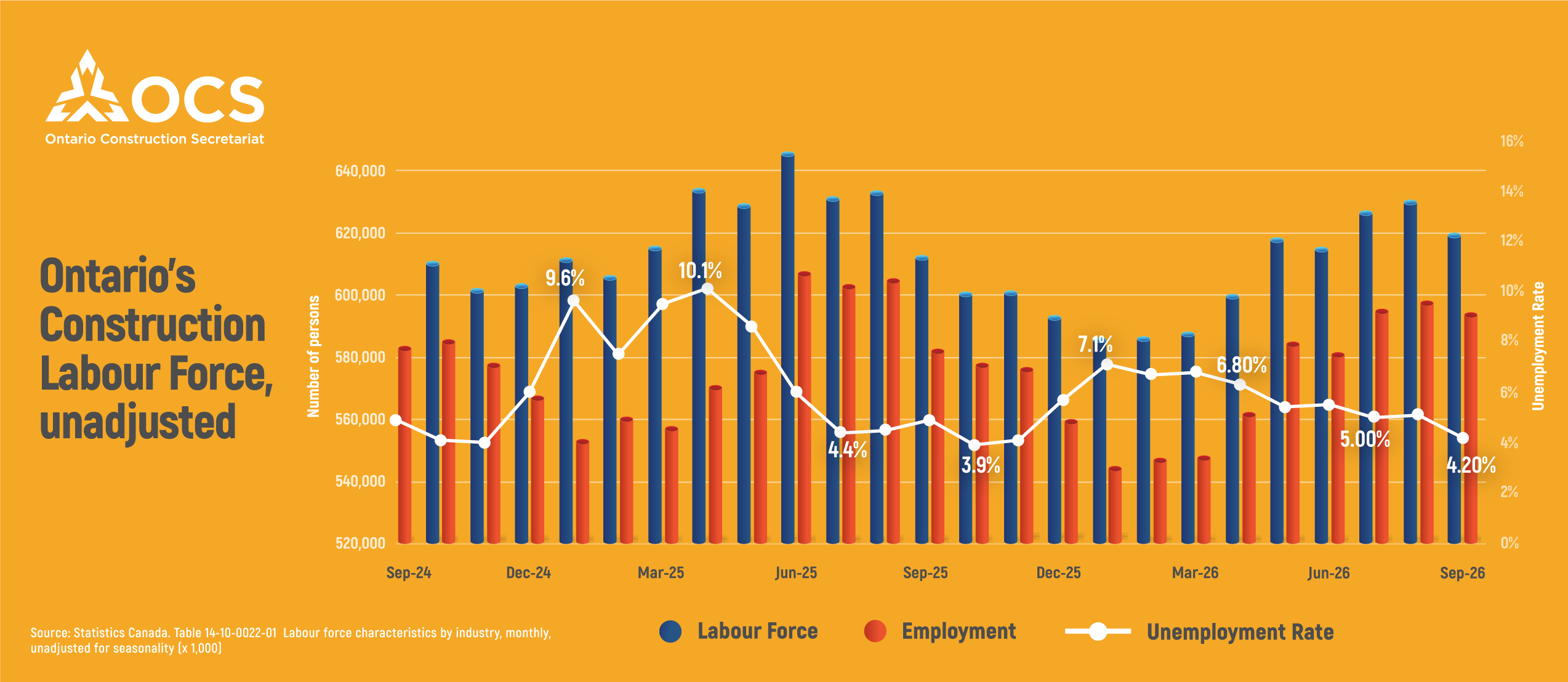
Ontario’s construction unemployment rate fell to 4.2% in September 2026, down from 5.5% in June, while employment increased by 12,800 workers. Employment gains were strongest among younger workers, while the core working-age group recorded declines in both labour force and employment.
LABOUR MARKET OVERVIEW
While unemployment increased in other sectors of Ontario’s economy, the construction sector recorded a further decline in its unemployment rate during the third quarter. The construction unemployment rate fell to 4.2% in September 2026, down from 5.5% in June, marking an improvement from the end of the second quarter.
Ontario’s construction labour force increased by approximately 4,500 workers compared with June and remained 7,100 workers above its September 2025 level.
Construction employment also strengthened, increasing by approximately 12,800 workers, or 2.2%, since June. Despite broader economic uncertainty, employment remained 2.0% higher than a year earlier.
Together, these figures indicate that employment growth outpaced the increase in the labour force during the quarter, contributing to the decline in the construction unemployment rate.
COMPOSITION OF THE LABOUR FORCE
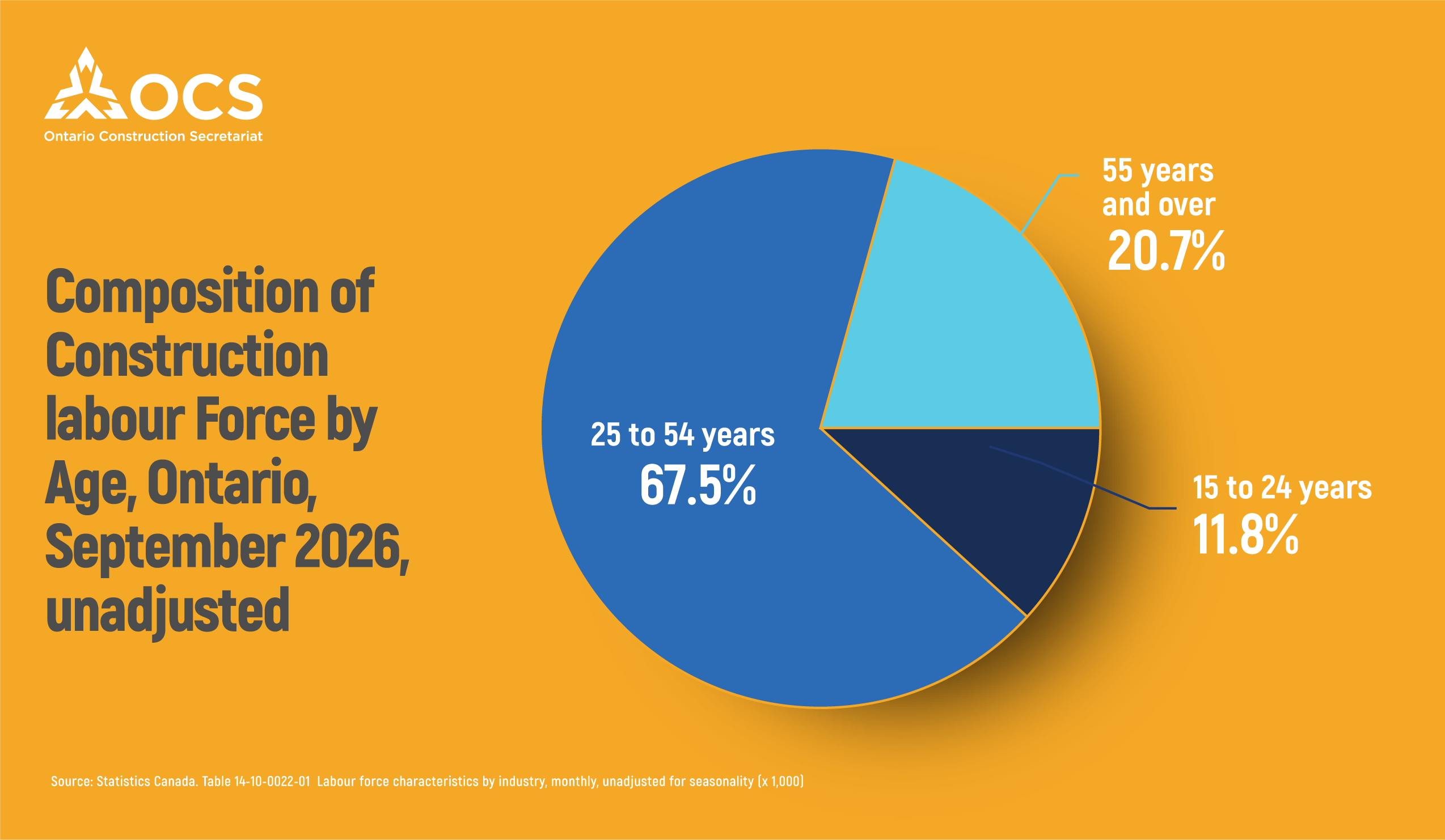
Changes in Ontario’s construction labour force varied considerably across age groups during the third quarter of 2026.
Younger workers aged 15 to 24 led the increase, with their labour force growing by approximately 12,900 workers, or 21.5%, since June. Employment in this age group rose even faster, increasing by 14,200 workers, or 25.8%. This growth likely reflects seasonal hiring during the summer months, with participation expected to ease as students return to school. Despite these gains, the number of younger workers in the construction labour force remained 6,800 below September 2025.
In contrast, the core working-age group (25 to 54 years) recorded declines in both labour force participation and employment. The labour force fell by 10,400 workers, or 2.4%, while employment declined by 3,300 workers, or 0.8%. As the labour force contracted more sharply than employment, the number of unemployed workers in this age group decreased, contributing to the overall decline in the construction unemployment rate.
Among workers aged 55 and older, the labour force increased by approximately 2,000 workers, or 1.6%, while employment rose by 1,900 workers, also 1.6%. This age group continues to account for a growing share of Ontario’s construction workforce.
Overall, the construction labour force increased by 4,500 workers, or 0.7%, while employment rose by 12,800 workers, or 2.2%, between June and September. The stronger growth in employment relative to the labour force helped bring the sector’s unemployment rate down to 4.2% in September.
WOMEN IN CONSTRUCTION
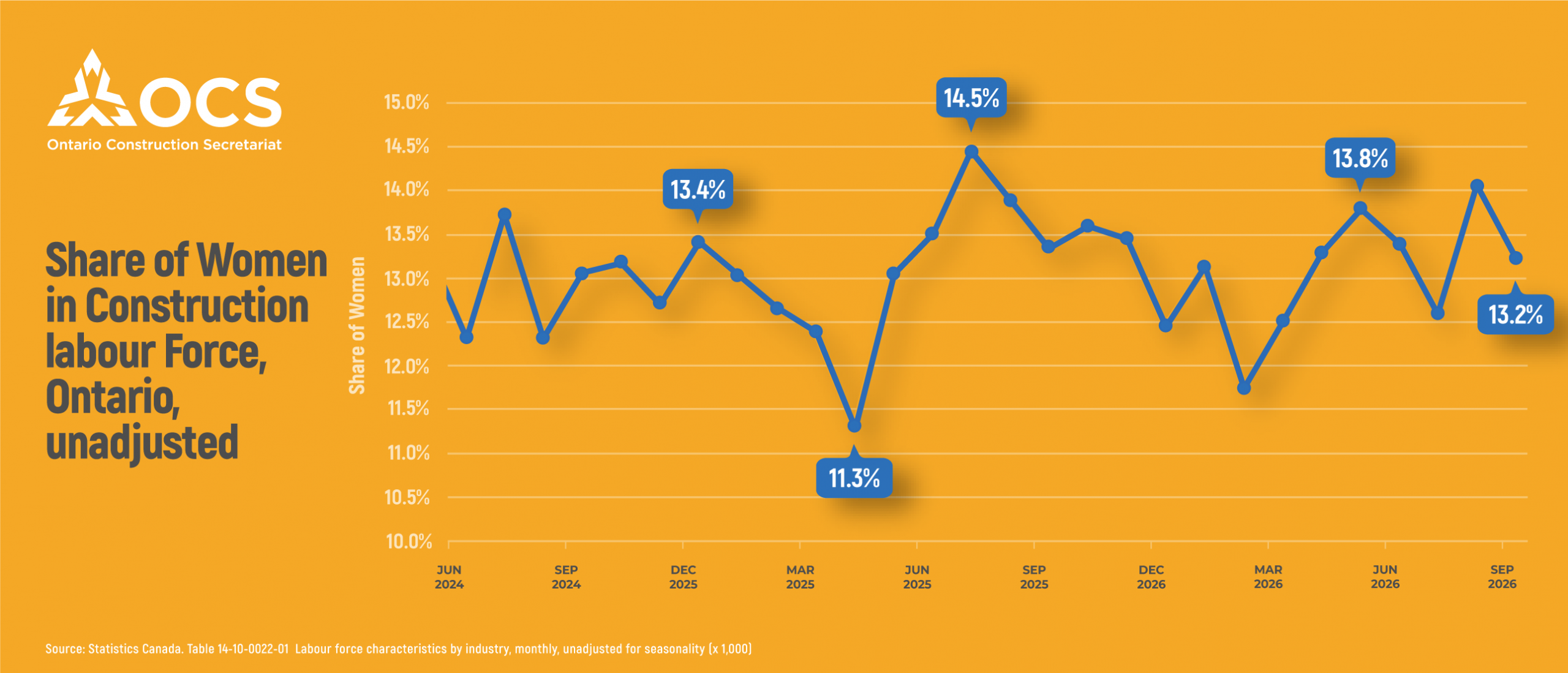
Women accounted for 13.2% of Ontario’s construction labour force in September 2026, down slightly from 13.4% in June and nearly unchanged from a year earlier.
The number of women in the construction labour force declined by approximately 300 workers over the quarter. However, employment among women increased by approximately 3,900 workers during the same period.
This indicates that although the overall number of women participating in the construction labour force edged lower, a greater number were employed by the end of the third quarter.
____________________________
FOR MORE INFORMATION, CONTACT:
Gargi Bharti
Economic and Research Project Lead
Ontario Construction Secretariat (OCS)
180 Attwell Drive, Suite 360, Toronto, ON M9W 6A9
P 416.620.5210
gbharti@iciconstruction.com